The
Project
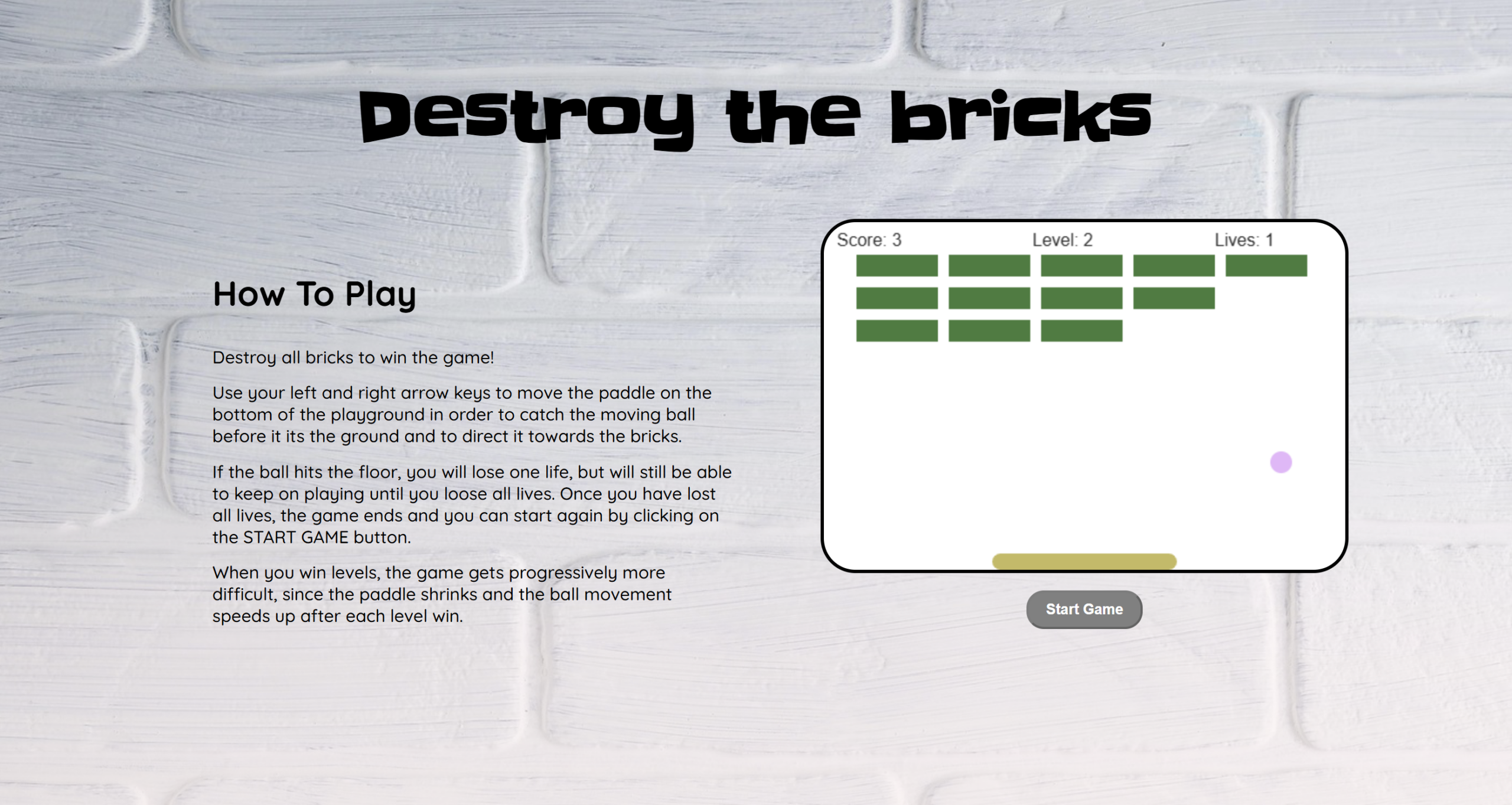
The game invites players to clear a field of color‑shifting bricks by bouncing a ball off a movable paddle and the surrounding walls. The paddle—controlled with the left and right arrow keys—changes color as the game progresses, reinforcing the visual rhythm of play. Each brick destroyed increases the score, while every missed ball costs the player one life. The session continues until all lives are lost.
If the player manages to clear the board, they advance to the next level. With each progression, the challenge increases: the paddle becomes smaller and the ball accelerates, creating a more demanding and dynamic interaction. This gradual escalation encourages players to adapt their timing and precision, turning a simple mechanic into an engaging, skill‑based experience.
Type of project: Browser Game.
Role: Game Designer, Programmer.
Tools: Visual Code Studio, HTML, CSS, JavaScript, API.
Mapping the Interaction
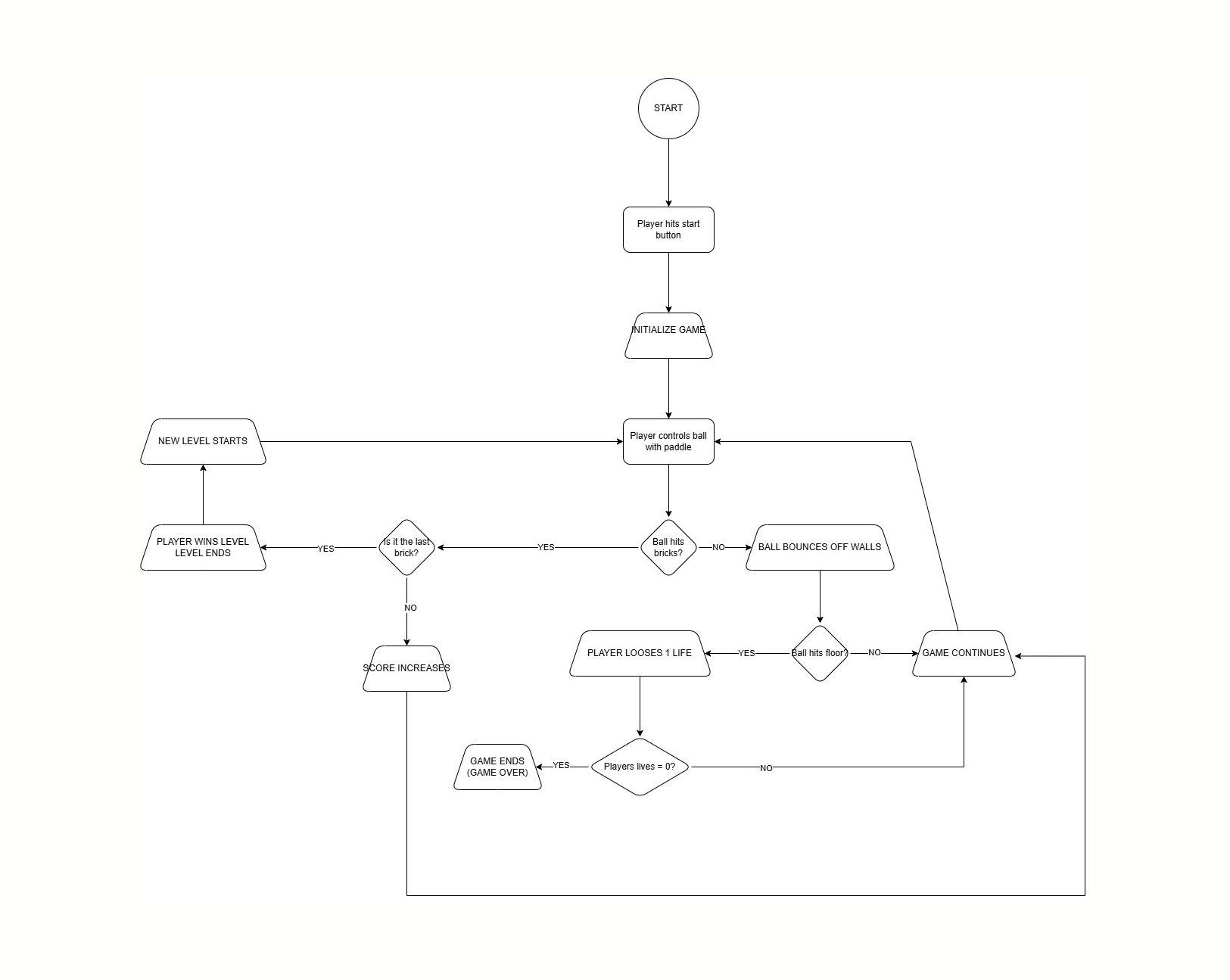
The diagram maps the game’s interaction flow, illustrating how player input, ball movement, and collision detection shape the experience. It highlights key decision points—such as losing a life, clearing the last brick, or advancing to the next level—making the underlying mechanics easy to understand at a glance.
Prototyping and Testing
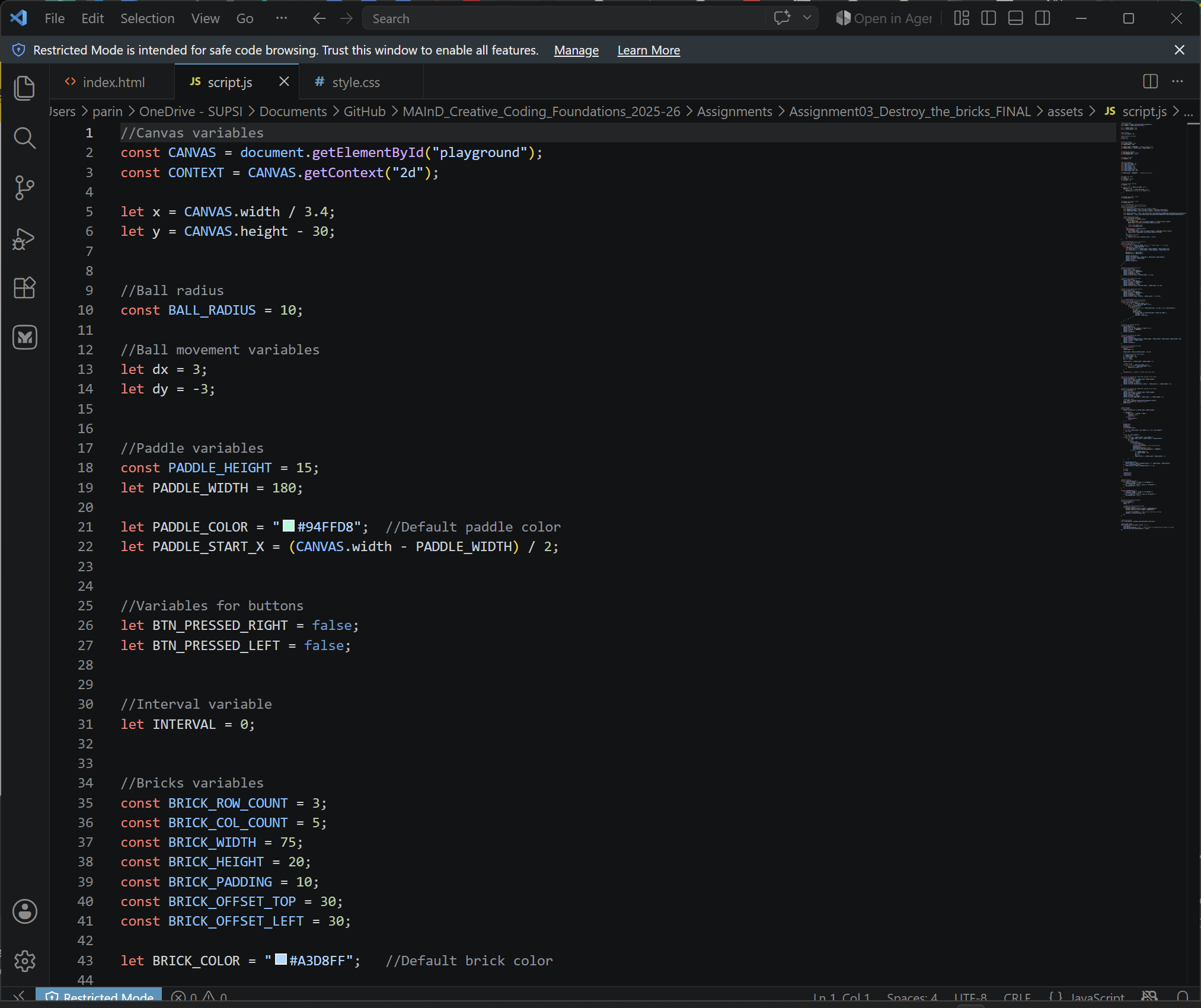
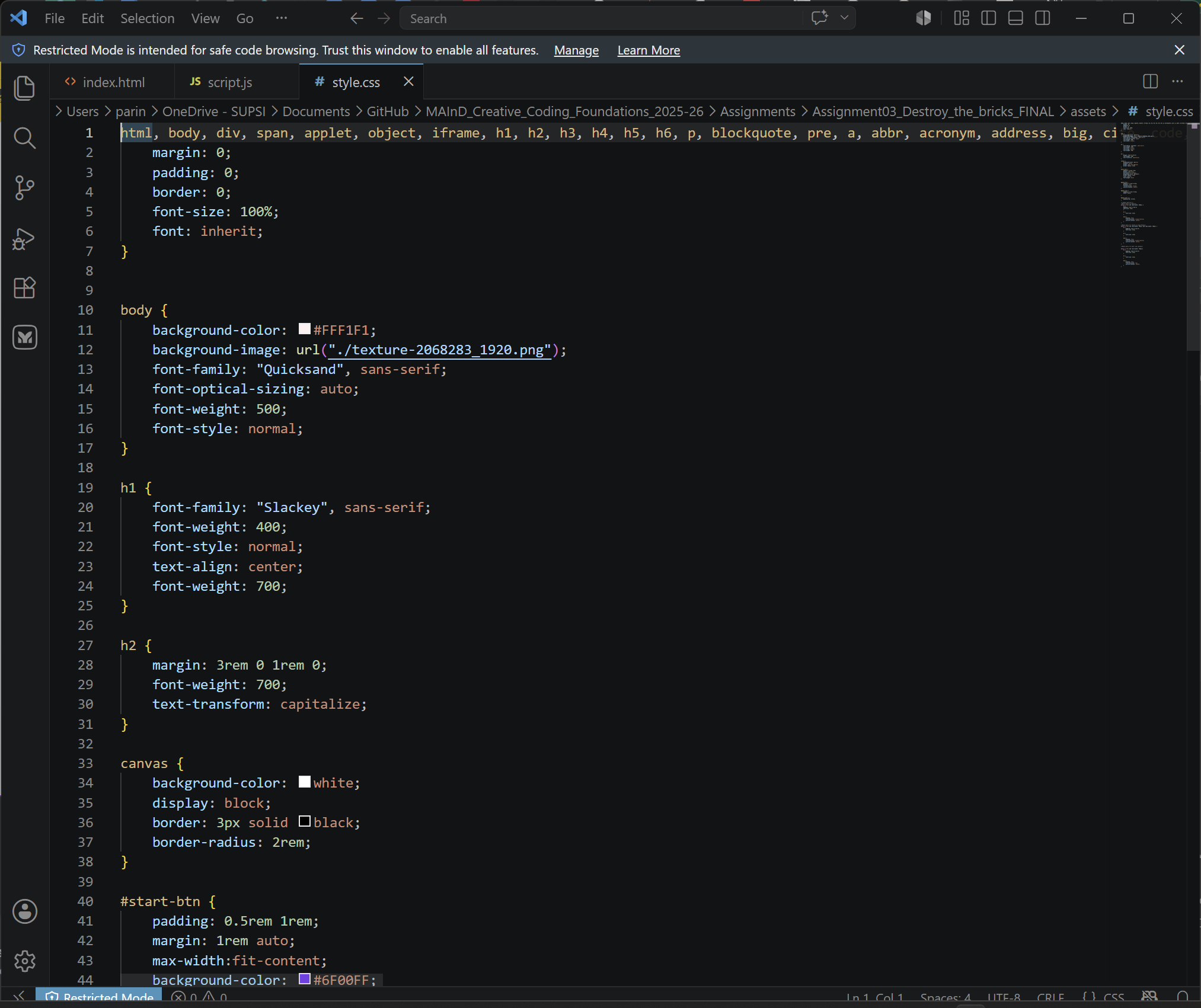
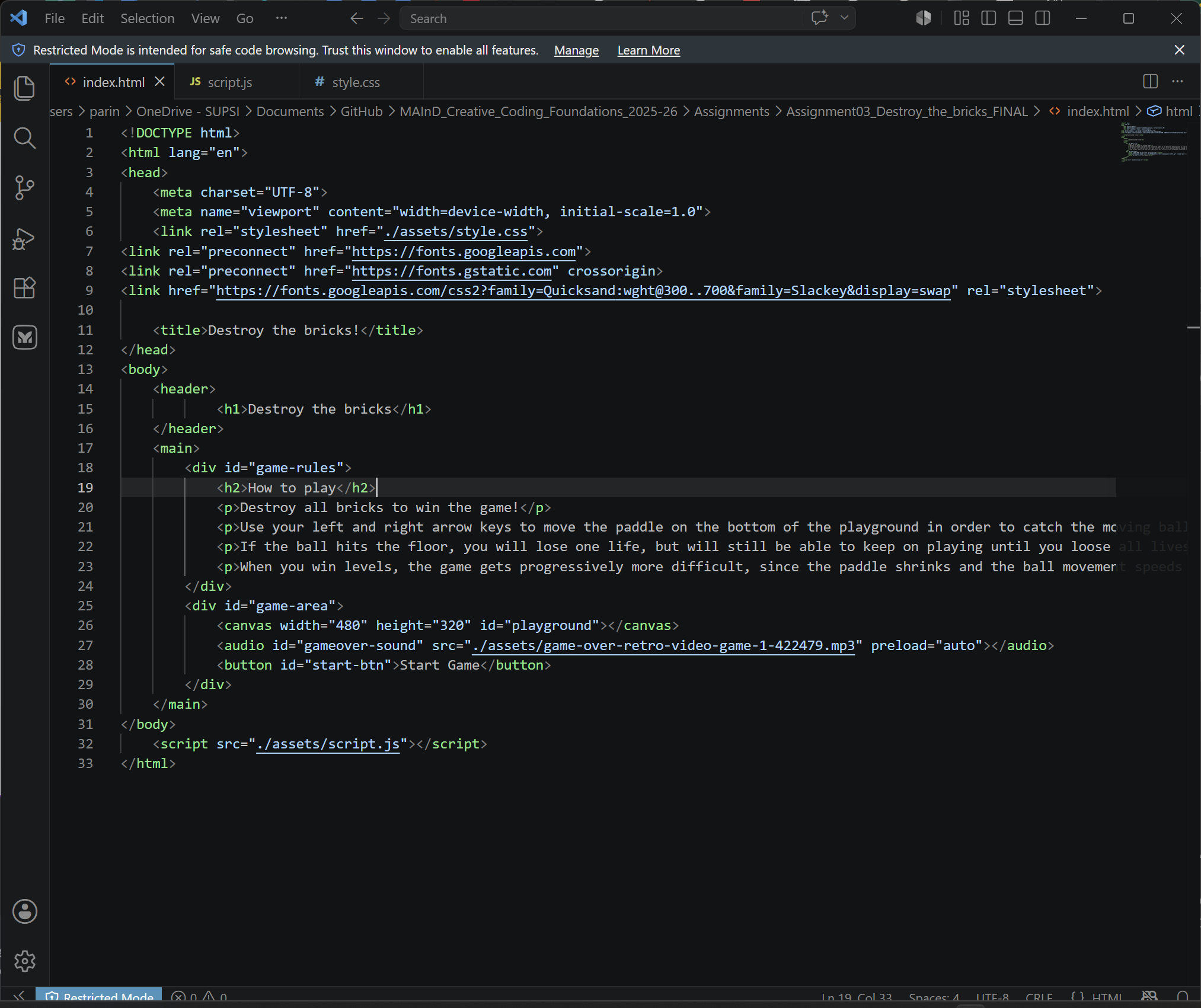
I was responsible for coding the system that connects player actions to the game’s visual and behavioral responses. This involved building functions for rendering the bricks, paddle, and ball; detecting collisions; updating the score and lives; and managing level transitions. I also implemented a color‑fetching function that pulls new palettes from an external API, allowing the game’s look to shift dynamically. All of these elements come together in the main loop, which continuously updates the canvas based on user input.
The Physical Interaction
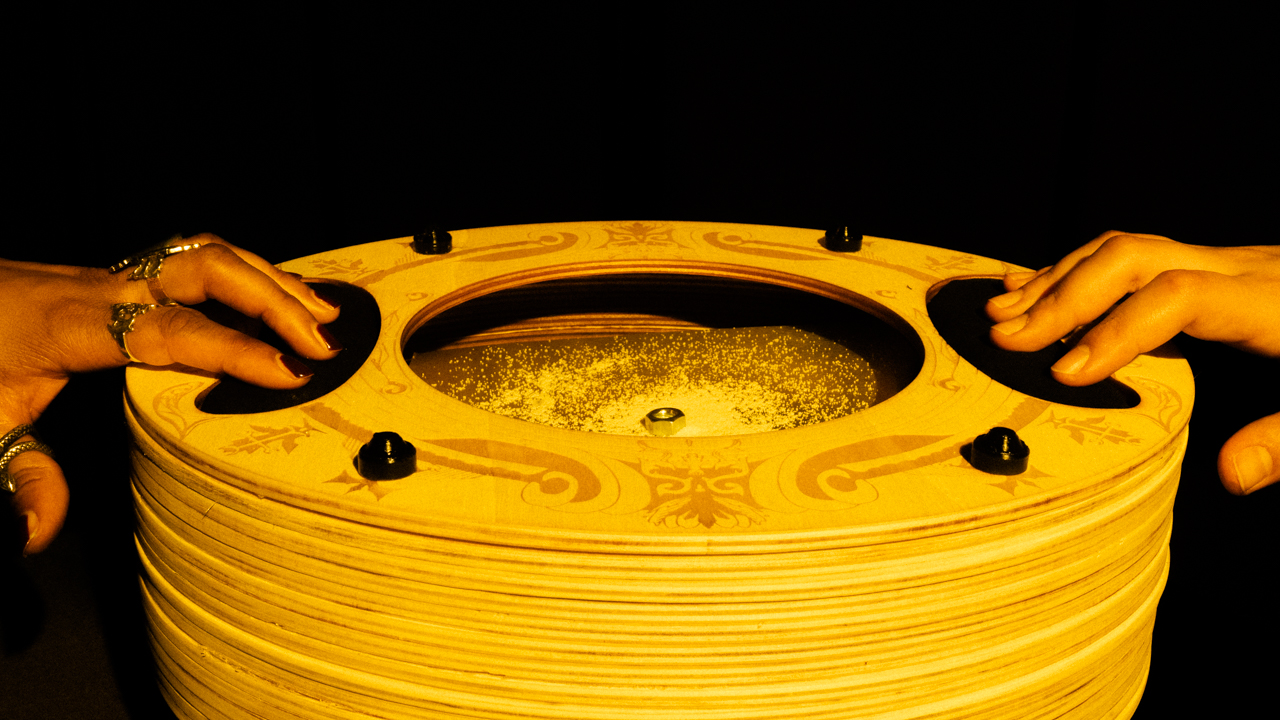
The primary interaction happens through the buttons placed on top of the device. Designed for two users, one set controls the frequencies transmitted to the plate while the other adds sound effects, allowing each participant to influence the system in a different way. These buttons are connected to touch sensors with distinct settings, ensuring that every gesture produces a unique sonic and visual response.
A second layer of interaction introduces a more ritualistic dimension: users insert material into the machine, choosing both the type and the quantity. These choices directly shape the patterns formed on the vibrating plate, and the material can later be collected and reused. The final output is both auditory and visual—participants actively shape the emitted sound as well as the shifting figures that emerge, making the experience a continuous dialogue between touch, vibration, and form.
The Code
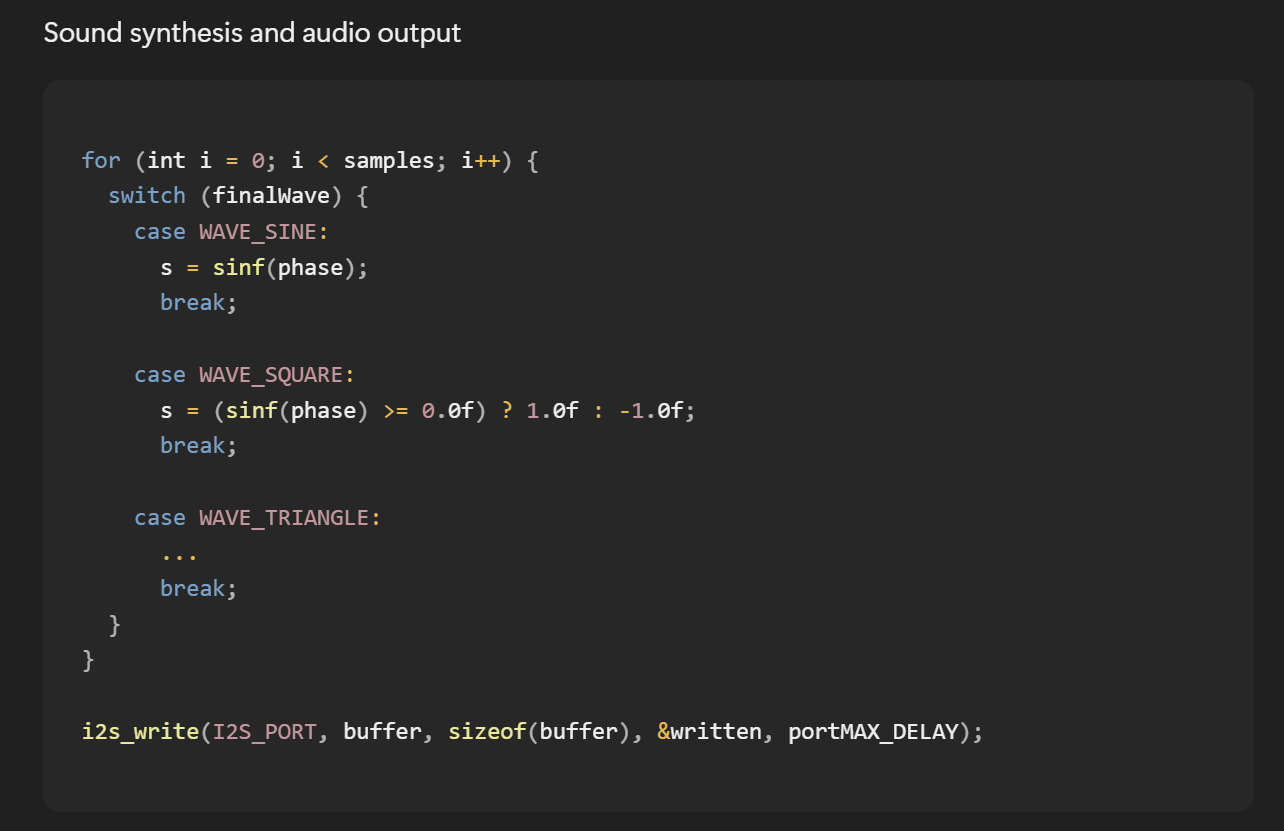
My role focused on coding the interaction layer: programming the touch sensors, defining how each button triggers specific frequencies or sound effects, and shaping the system’s real‑time responses. I also contributed to the logic that drives the visual patterns, ensuring that sound, vibration, and user input remain tightly connected.
The Exhibition at Saceba
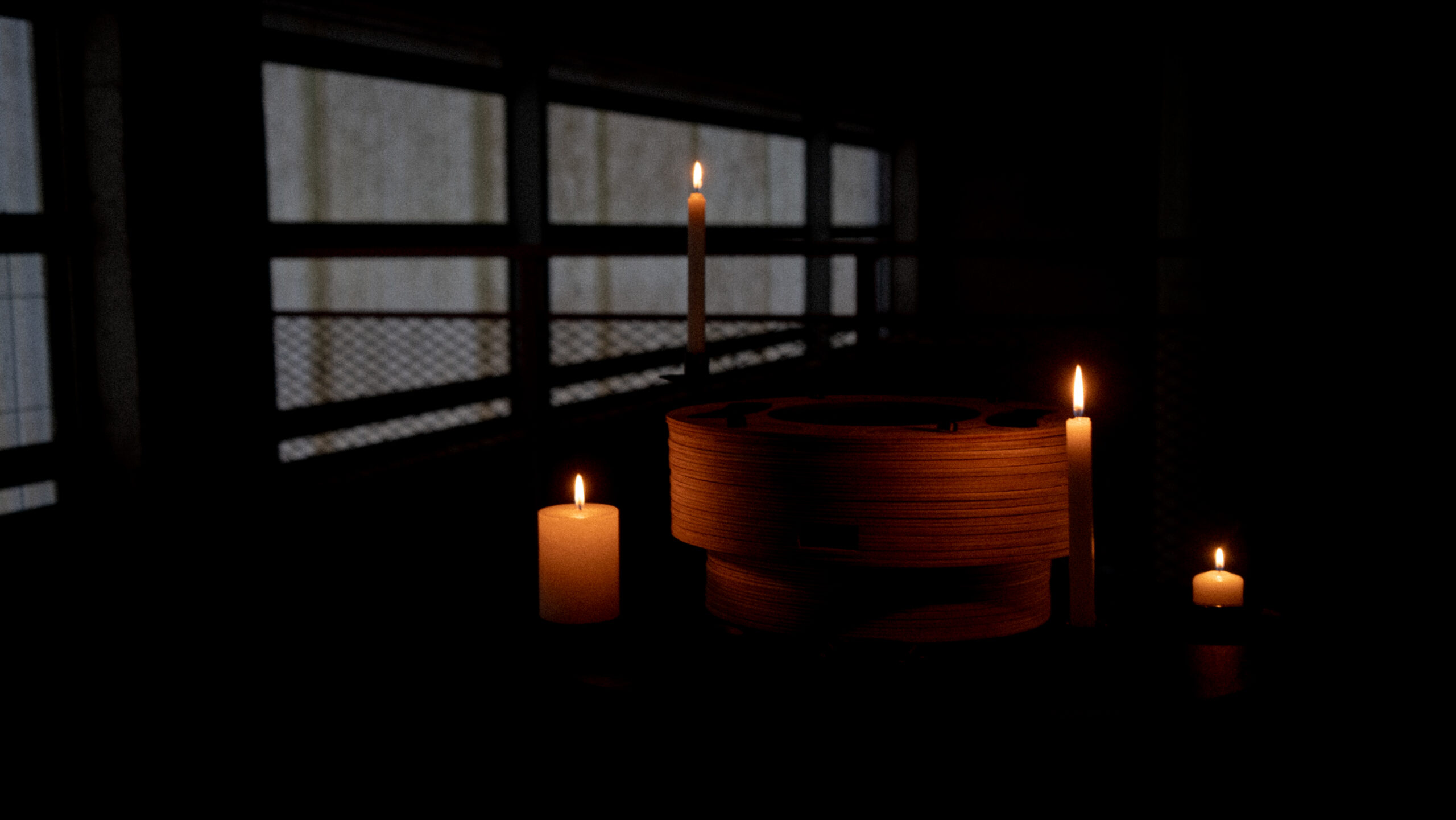



We installed the interactive piece on the third floor of the now disused Saceba factory, which is situated in Morbio Inferiore (Ticino, CH). We aimed at placing it in a dim, secluded corner that enhanced its atmosphere. The device sat on a table draped in black fabric, accompanied by candles and black and red sand to reinforce the ritualistic quality of the experience.
Selected Works
Contact Me
Copyright © 2026 Isabel Mercedes Parini.
All rights reserved.