Game Hub
Two Vibe Coded Games
Interactive Game Hub is a playful system that explores how gestures and everyday objects can become alternative game controls. The project combines computer vision, hand‑tracking, and object recognition to create two distinct games — Cat Escape and Riddle Object Hunter — each offering a different way of interacting with the computer. By replacing traditional inputs with body movement and physical objects, the Game Hub invites players into more embodied, exploratory forms of play.
Context
Role: Interaction design, gesture mapping, object‑based interaction design, prototyping
Type: Interactive game prototype — group project
Duration: 2 weeks
Skills: UX for playful systems, multimodal interaction, prototyping, narrative framing
Technologies: Hand‑tracking, gesture recognition, webcam object recognition, LLM‑based riddle generation, Python‑based game logic
Intent
The Interactive Game Hub was developed as an experiment in alternative game controls: How can gestures and everyday objects become expressive, intuitive ways to play?
Instead of relying on keyboards or controllers, the project explores:
- the immediacy of hand gestures
- the interpretive playfulness of object recognition
- the narrative potential of riddles and hints
- the emotional engagement created by embodied interaction
The goal was to design games where meaning emerges through movement, discovery, and improvisation — not through predefined button inputs.
Games
Cat Escape
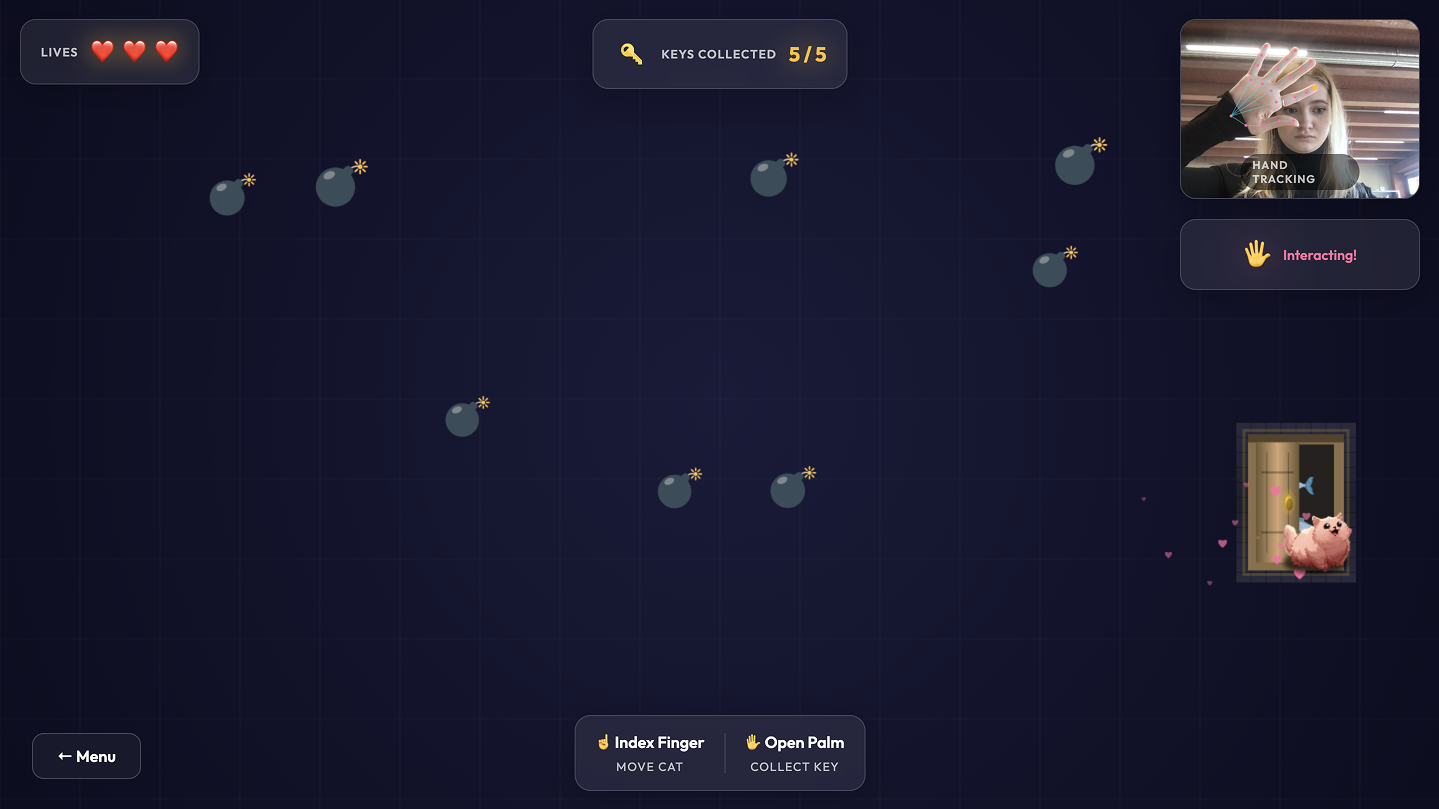
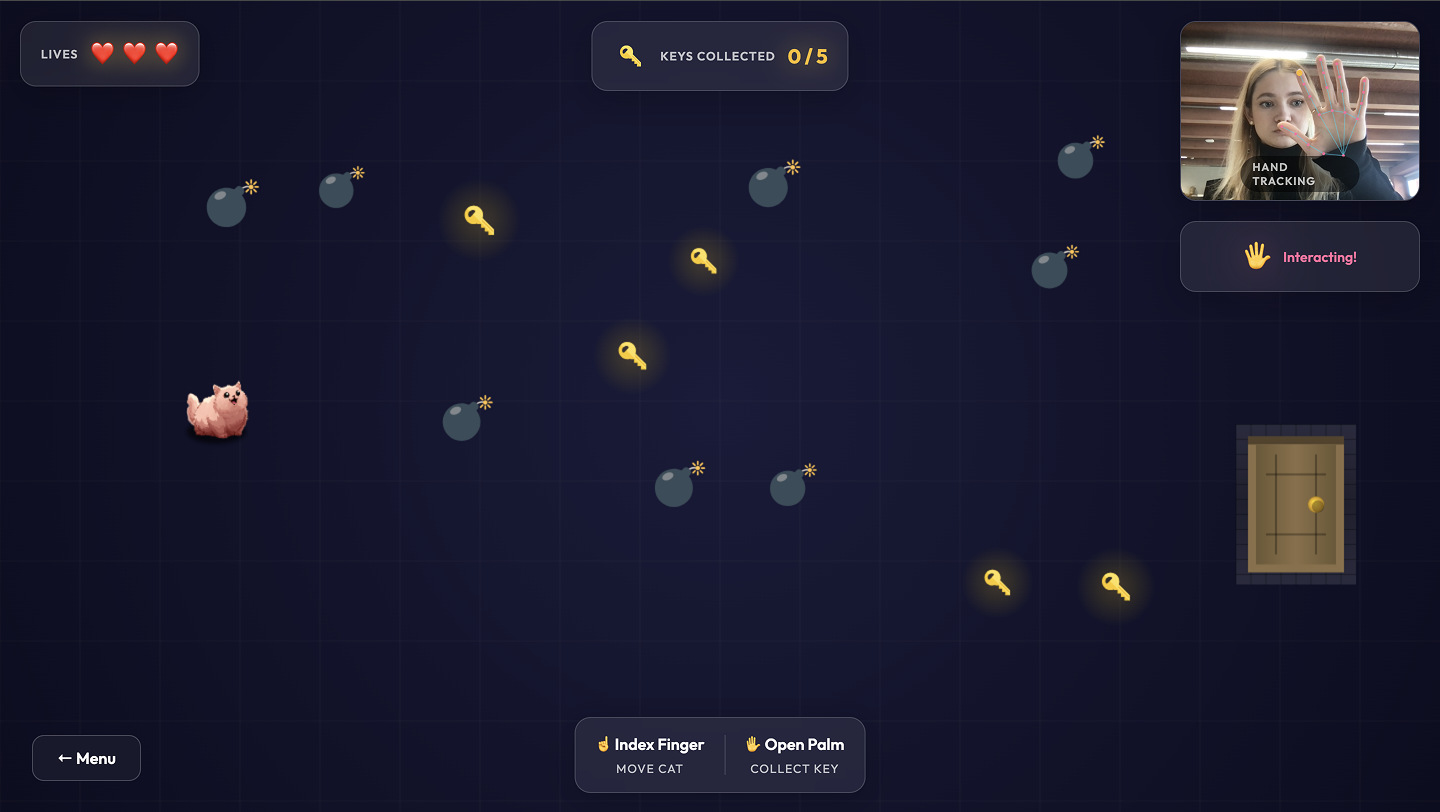
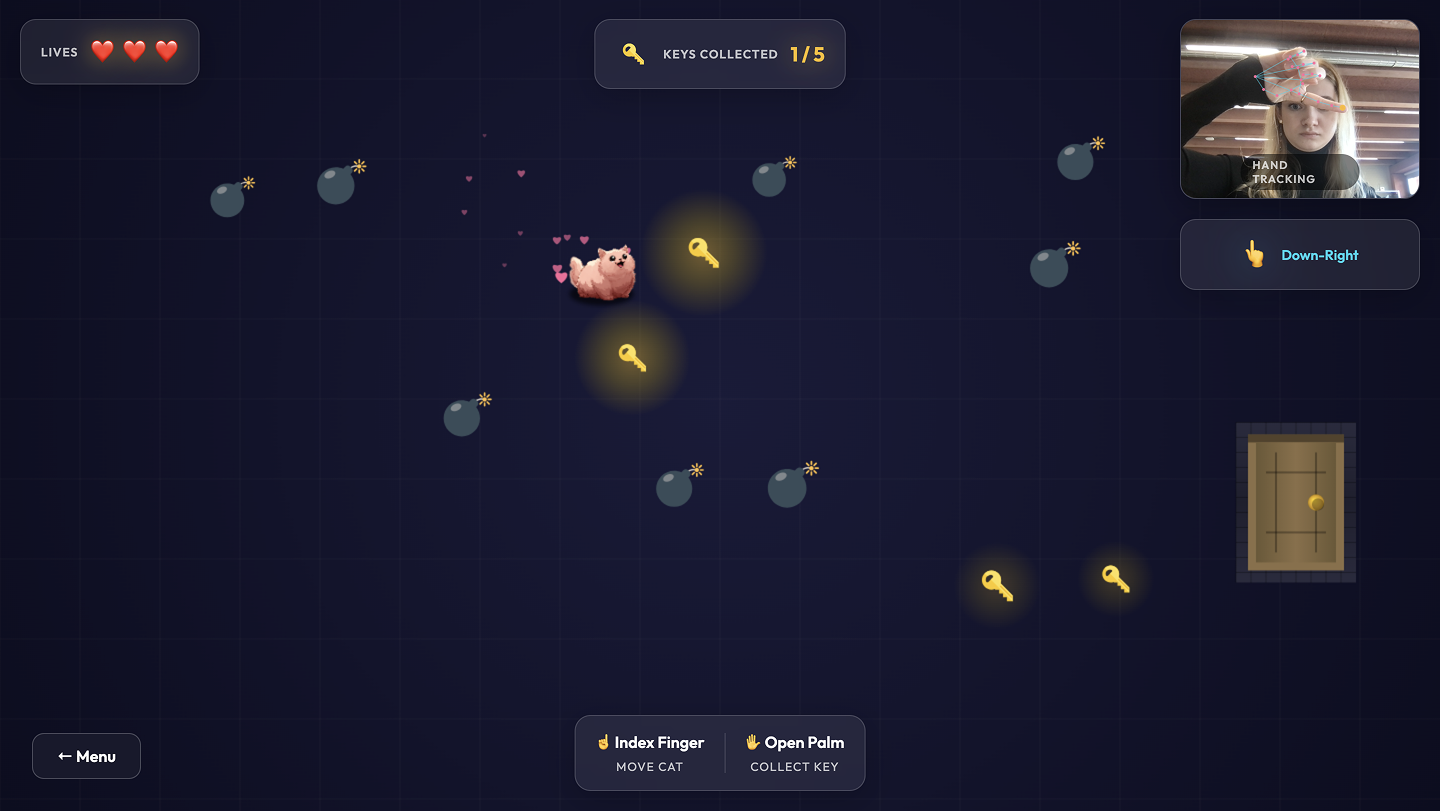
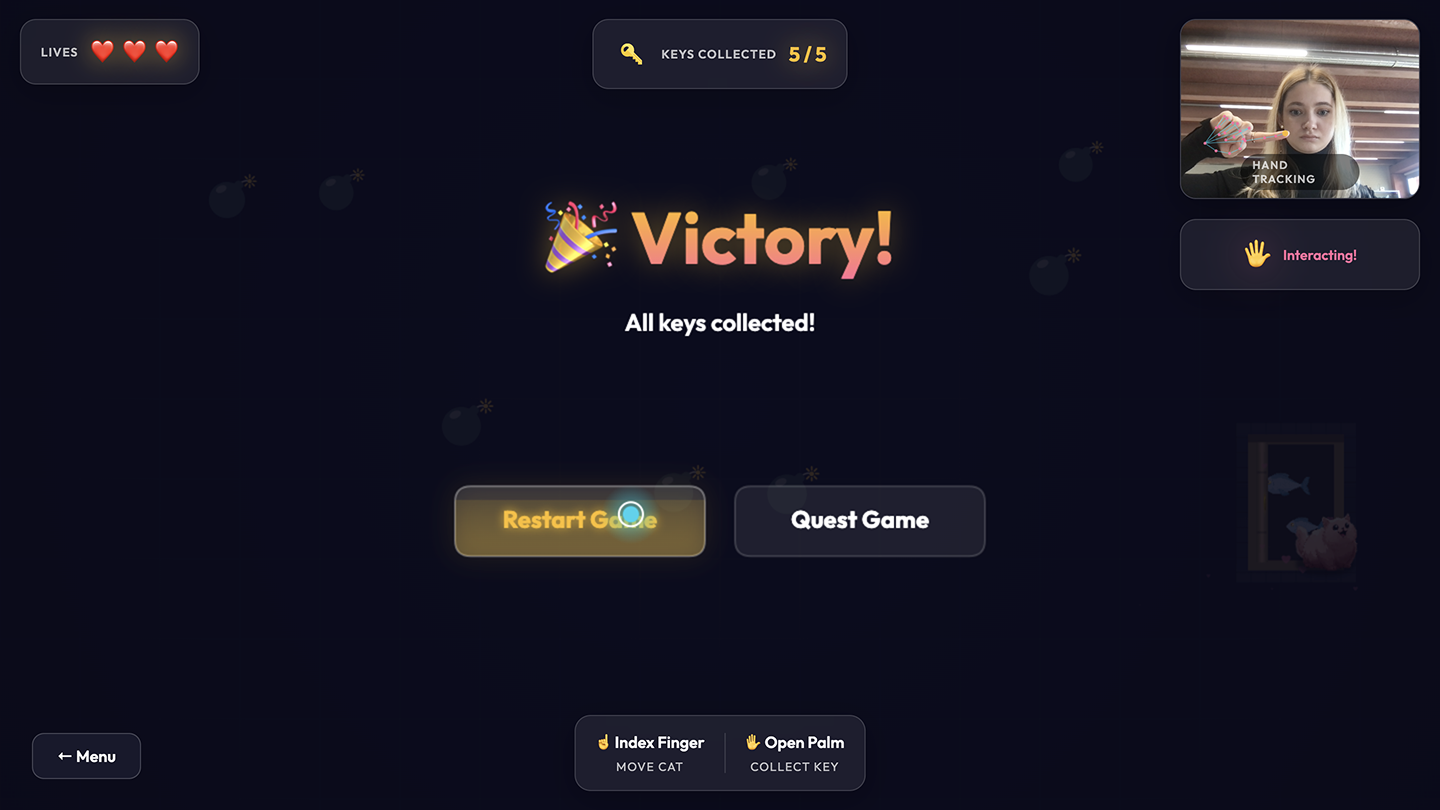
A gesture‑controlled game where the player helps a cat escape a room by collecting five keys while avoiding bombs.
- Show your palm to activate hand recognition
- Use your index finger to guide the cat
- Show your palm again to collect keys
- Escape through the door once all keys are collected
- Three lives allow for mistakes when touching bombs
Cat Escape transforms simple hand movements into directional control and object interaction.
Riddle Object Hunter
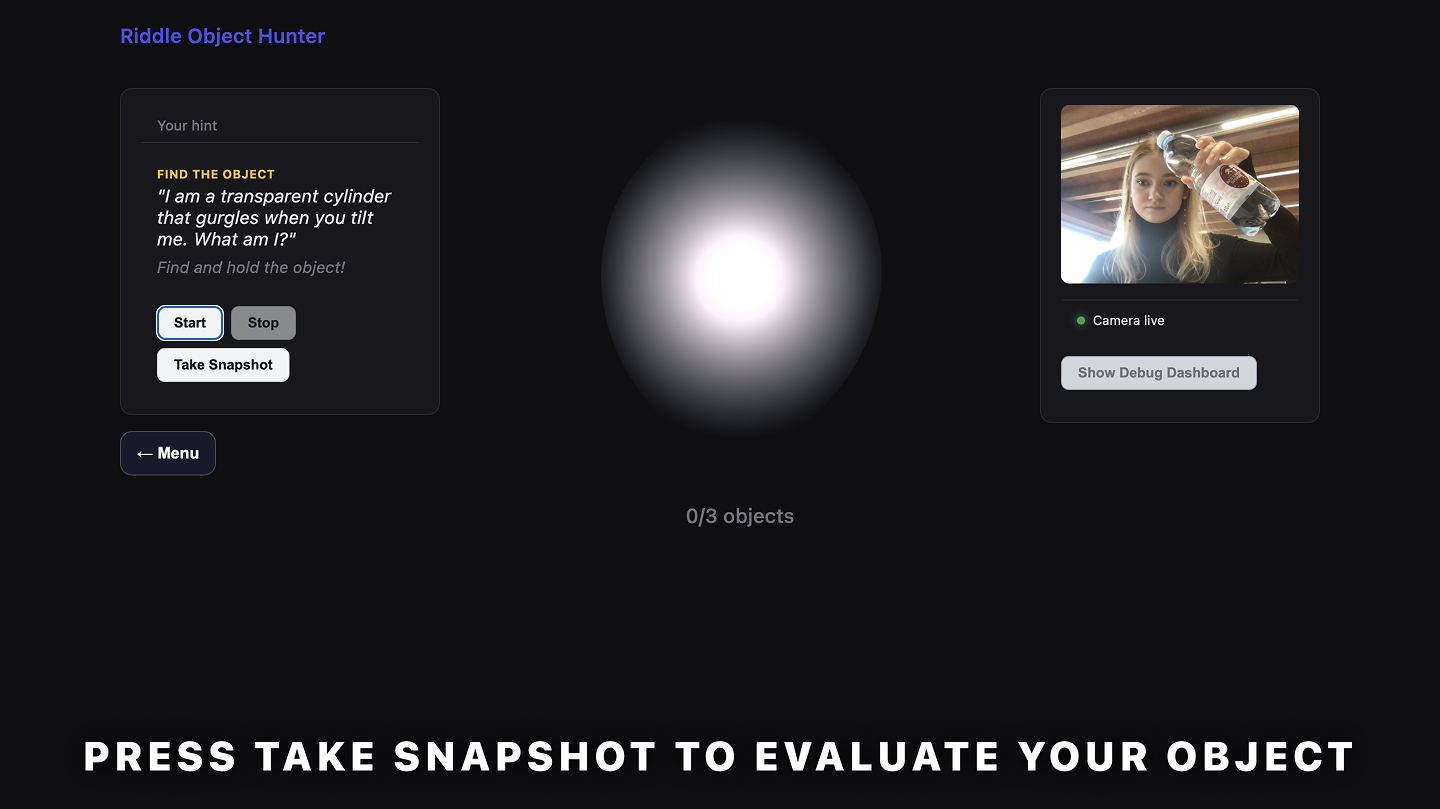
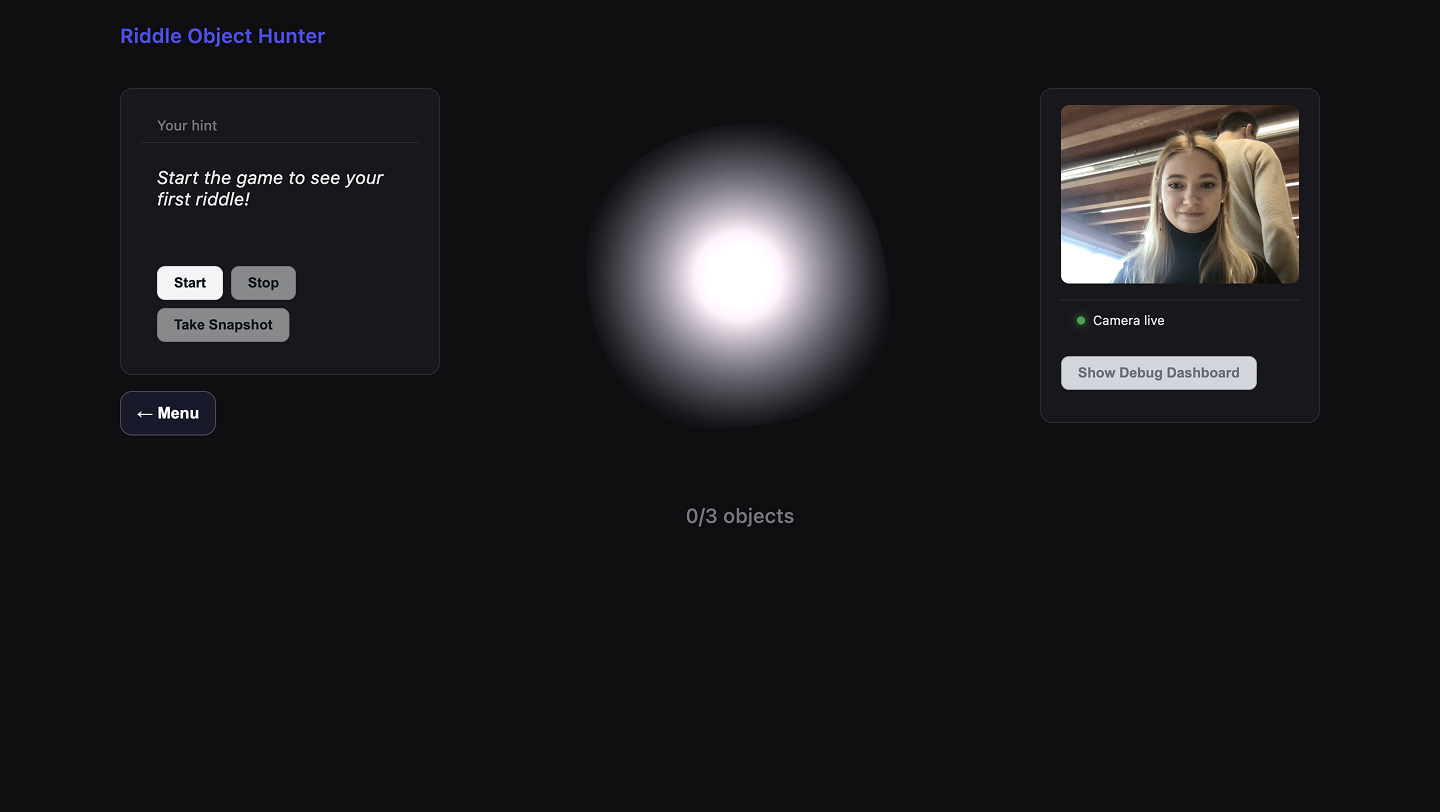
A riddle‑based object recognition game where the player must wake a spirit by presenting the correct object three times.
- A riddle provides a hint
- The player shows objects to the webcam
- A screenshot is taken for recognition
- The spirit reacts differently to correct vs. incorrect objects
- Each riddle introduces a new target object
- Completing three riddles wins the game
Riddle Object Hunter blends narrative clues with physical exploration, turning everyday objects into playful game mechanics.
Interaction Model
Gesture‑based control (Cat Escape)
- Palm detection activates tracking
- Index finger direction moves the character
- Palm gesture collects keys
- Sequential logic ensures the door opens only after all keys are collected
The game relies on simple, readable gestures that feel intuitive and responsive.
Object‑based control (Riddle Object Hunter)
- Webcam input captures the object
- Screenshot is used for recognition
- LLM‑generated riddles guide the player
- Spirit reactions provide feedback
- Three correct presentations complete each riddle
The interaction encourages experimentation, curiosity, and playful interpretation.
Process
Defining the Game Concepts
The team began by exploring how gestures and objects could serve as primary inputs. Two game ideas emerged naturally from this exploration: a gesture‑driven escape game and a riddle‑based object recognition challenge.
Prototyping Gesture Recognition
Early tests focused on:
- palm detection reliability
- index‑finger tracking accuracy
- mapping gestures to movement and interaction
- ensuring the cat’s behavior felt responsive
The gesture logic was refined until movement felt smooth and intuitive.
Developing Object Recognition
For Riddle Object Hunter, the team experimented with:
- webcam capture
- screenshot‑based recognition
- LLM‑generated riddles
- feedback animations for the spirit
The challenge was to make recognition forgiving enough to be playful, yet precise enough to feel meaningful.
Integrating Narrative & Feedback
Both games rely on simple narrative cues:
- keys and bombs in Cat Escape
- riddles and spirit reactions in Riddle Object Hunter
These elements were added to give each interaction emotional texture and purpose.
Testing & Refinement
The team iterated on:
- gesture sensitivity
- object recognition thresholds
- pacing of riddles
- clarity of feedback
- overall playability
The final prototype demonstrates how multimodal inputs can create engaging, exploratory gameplay.
Reflection
Interactive Game Hub showed how gestures and everyday objects can unlock new forms of play. The project highlighted the importance of:
- clear, readable gestures
- forgiving recognition systems
- playful feedback loops
- narrative cues that support interaction
If expanded, the system could include additional games, more complex gestures, or richer object recognition. The project remains a meaningful exploration of embodied interaction and playful multimodal systems.
Selected Works
Looking forward to hearing from you!
Copyright © 2026 Isabel Mercedes Parini.
All rights reserved.