Medity
Interactive Meditation Cube
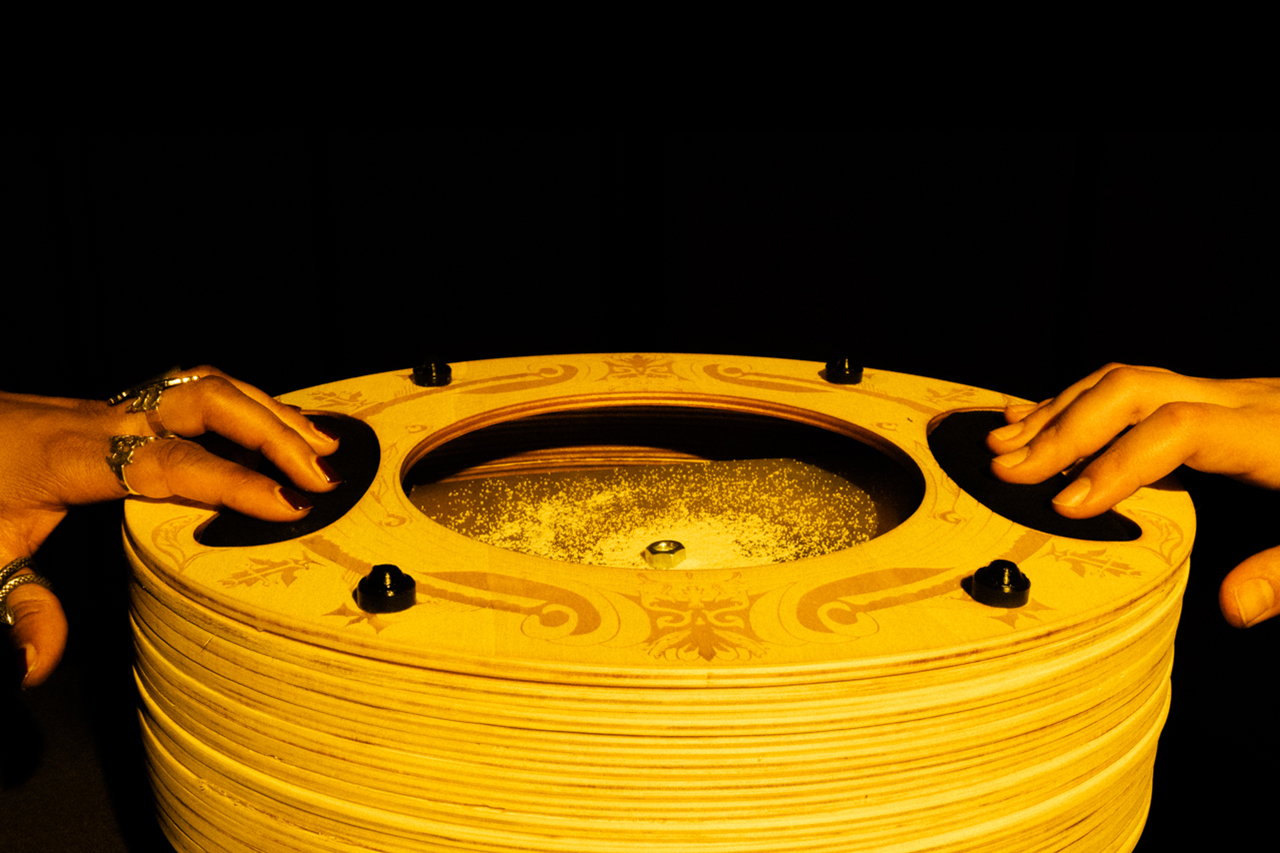
Medity is a handheld meditation companion that blends tactile interaction, ambient light, and soft audio to create a calming personal ritual. Through capacitive touch, users shape color, brightness, and atmosphere, while a simple MP3 track reinforces the meditative mood. The cube translates small gestures into expressive feedback, turning technology into a gentle, intuitive guide for mindful moments.
Context
Role: Interaction design, Arduino programming, LED behavior design, MP3 integration, experience design
Type: Interactive product prototype — group project (2 designers)
Duration: 2 weeks
Skills: UX for interactive objects, multimodal interaction design, prototyping, narrative framing, sound integration
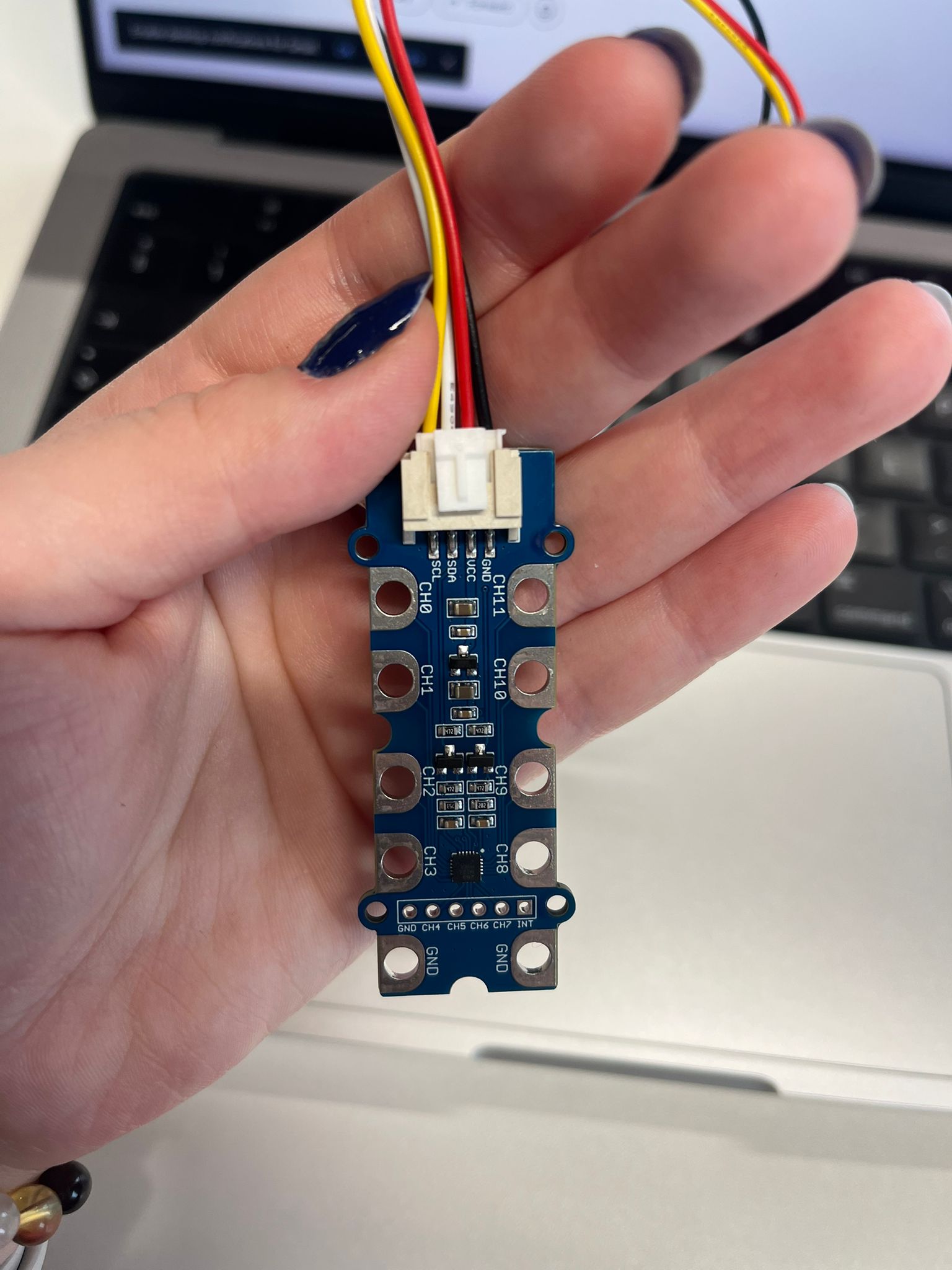
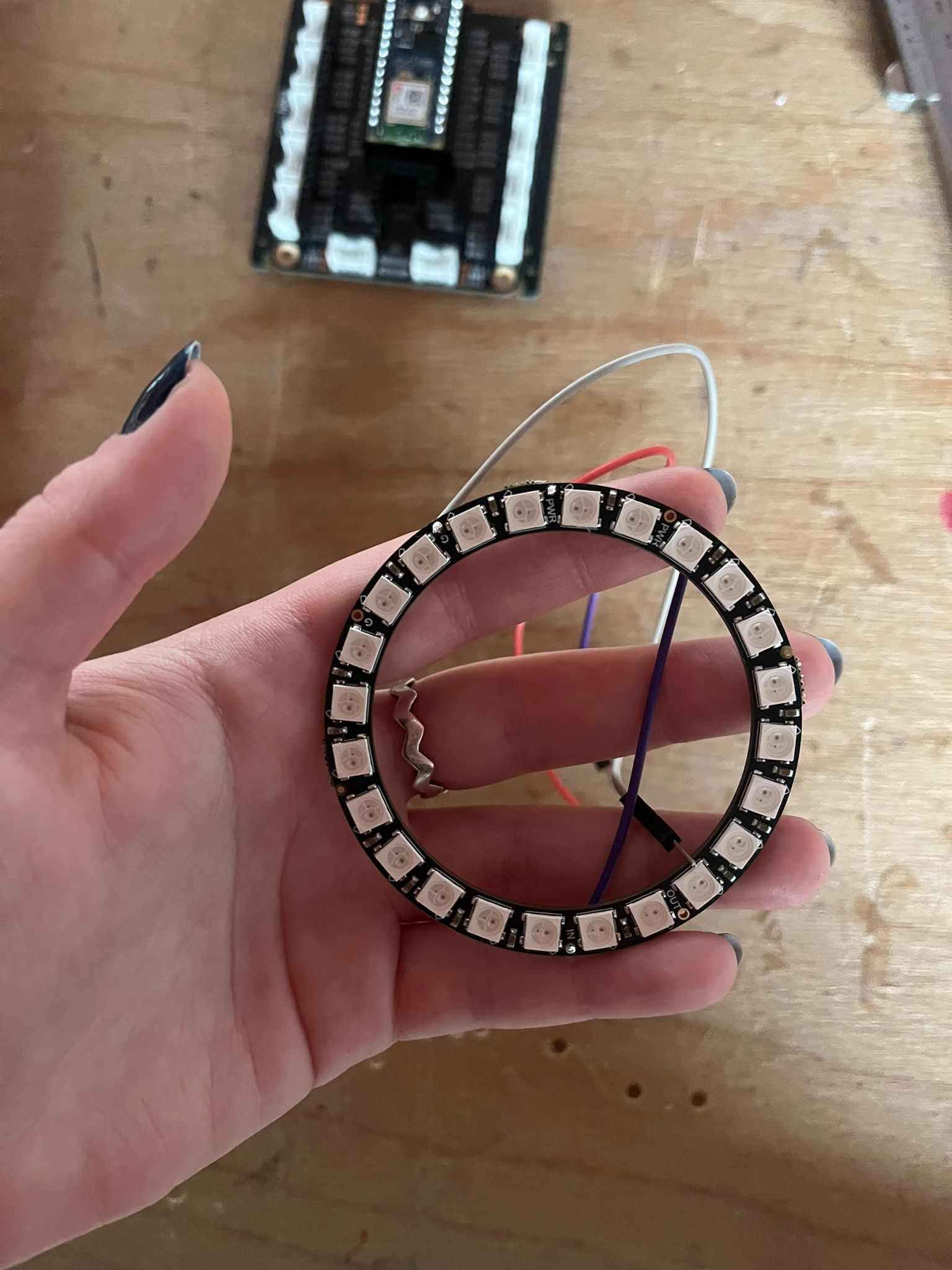
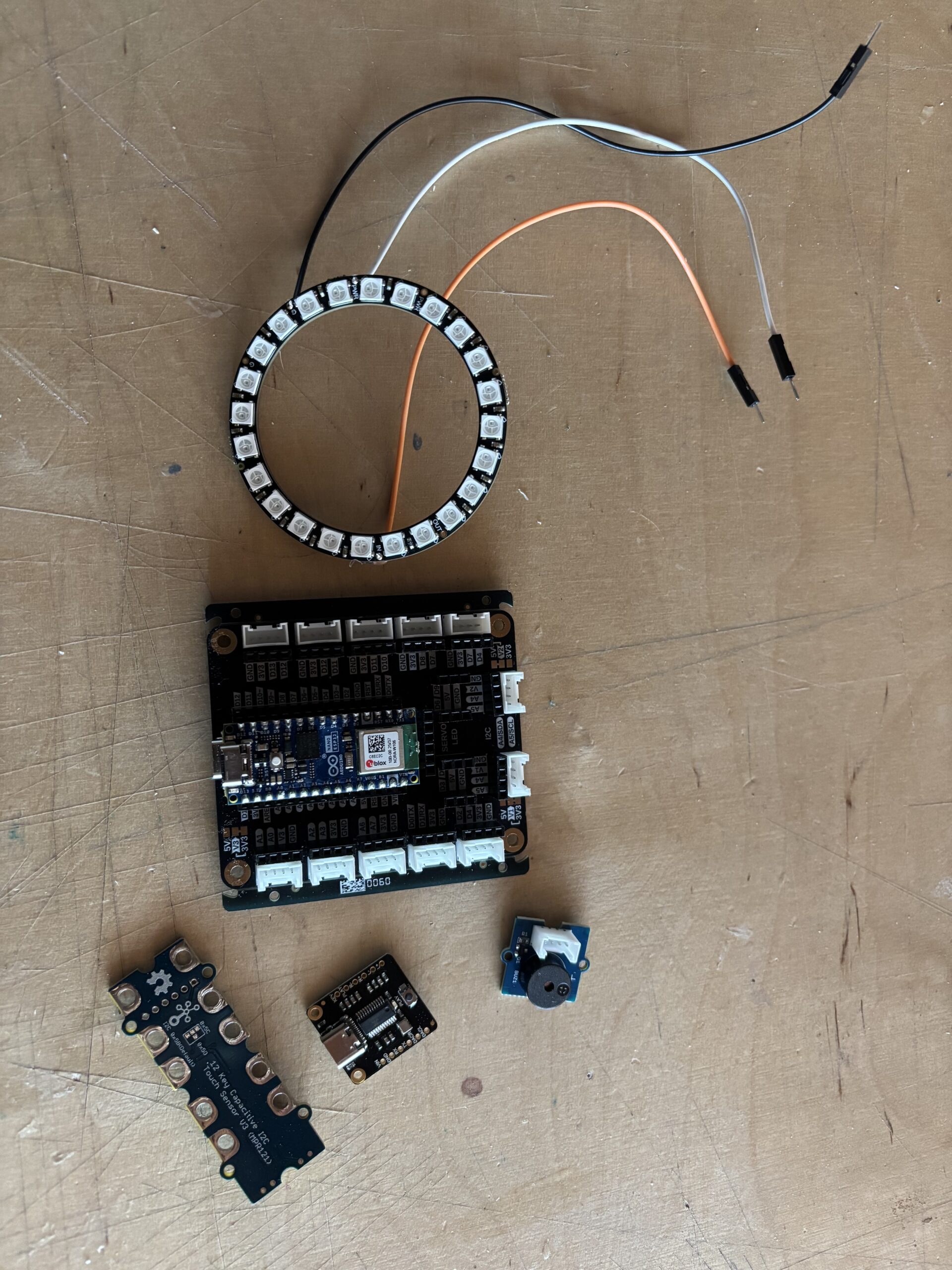
Technologies: Arduino Nano ESP32, capacitive sensing (MPR121), Adafruit Neopixel ring, MP3 audio playback, Grove buzzer, physical prototyping
Fabrication: Laser cutting, engraving, 3D printing, Fusion modeling — executed by my teammate
Intent
Medity was developed within a course on “magical devices,” where students designed speculative objects that extend human perception through sensors and computational logic. The brief encouraged the creation of fictional artefacts that reveal alternative ways of sensing or experiencing the world.
Within this frame, Medity explored a guiding question: How can a small, handheld object gently guide users into a meditative state through light, touch, and sound?
Rather than relying on screens or explicit instructions, the cube uses subtle cues — illumination, tactility, and a soft audio track — to shape the experience. Medity investigates:
- how physical objects can support mindfulness
- how tactile surfaces encourage slow, intentional interaction
- how light fading can signal transitions in time
- how simple audio cues can structure a meditation session
Medity positions meditation as a quiet, embodied ritual supported by a minimal, comforting object.
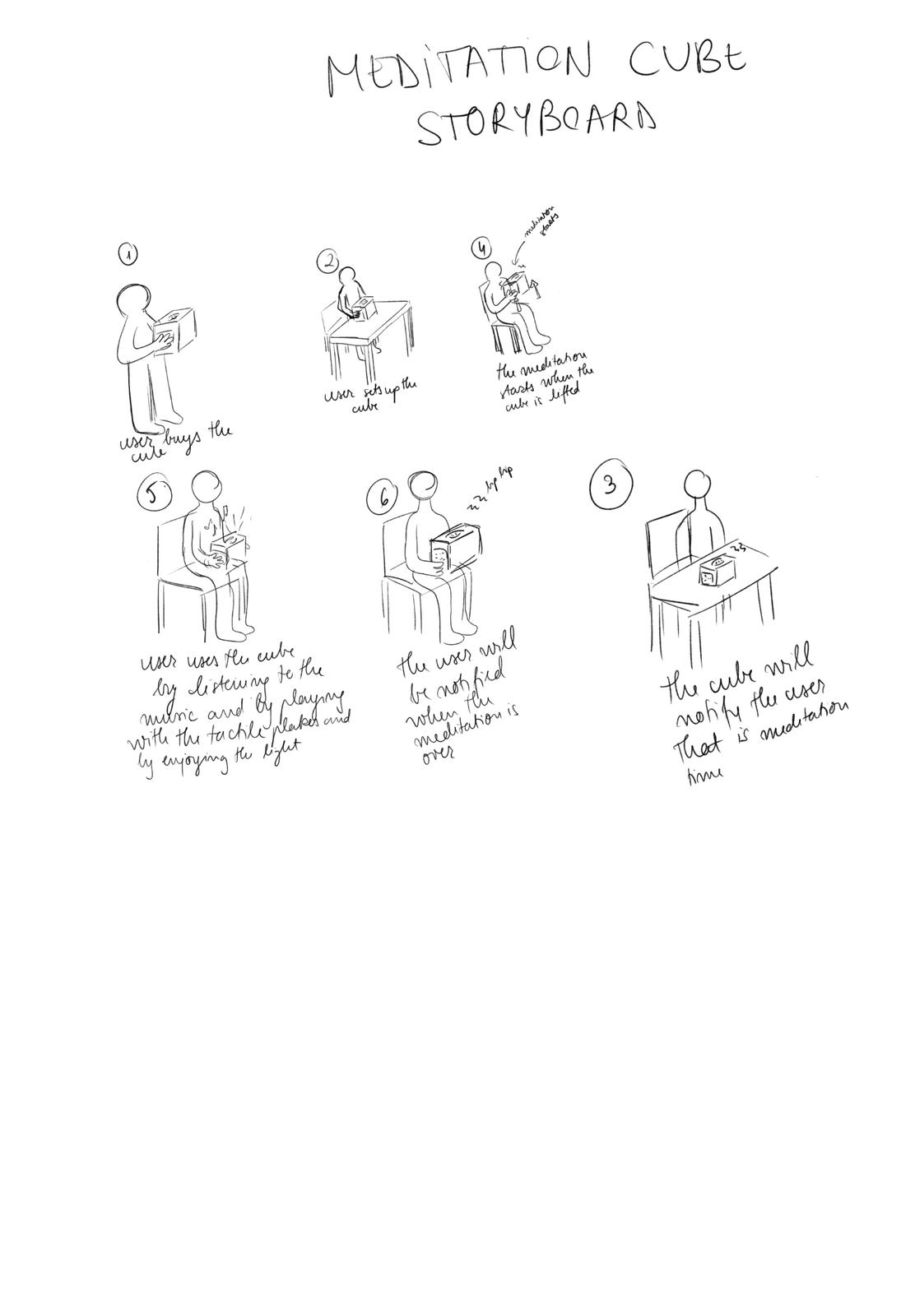
Interaction Model
Medity’s interaction model is built around a six‑step ritual:
- The user buys the cube.
- They unpack and configure it.
- The cube reminds them when the meditation session begins.
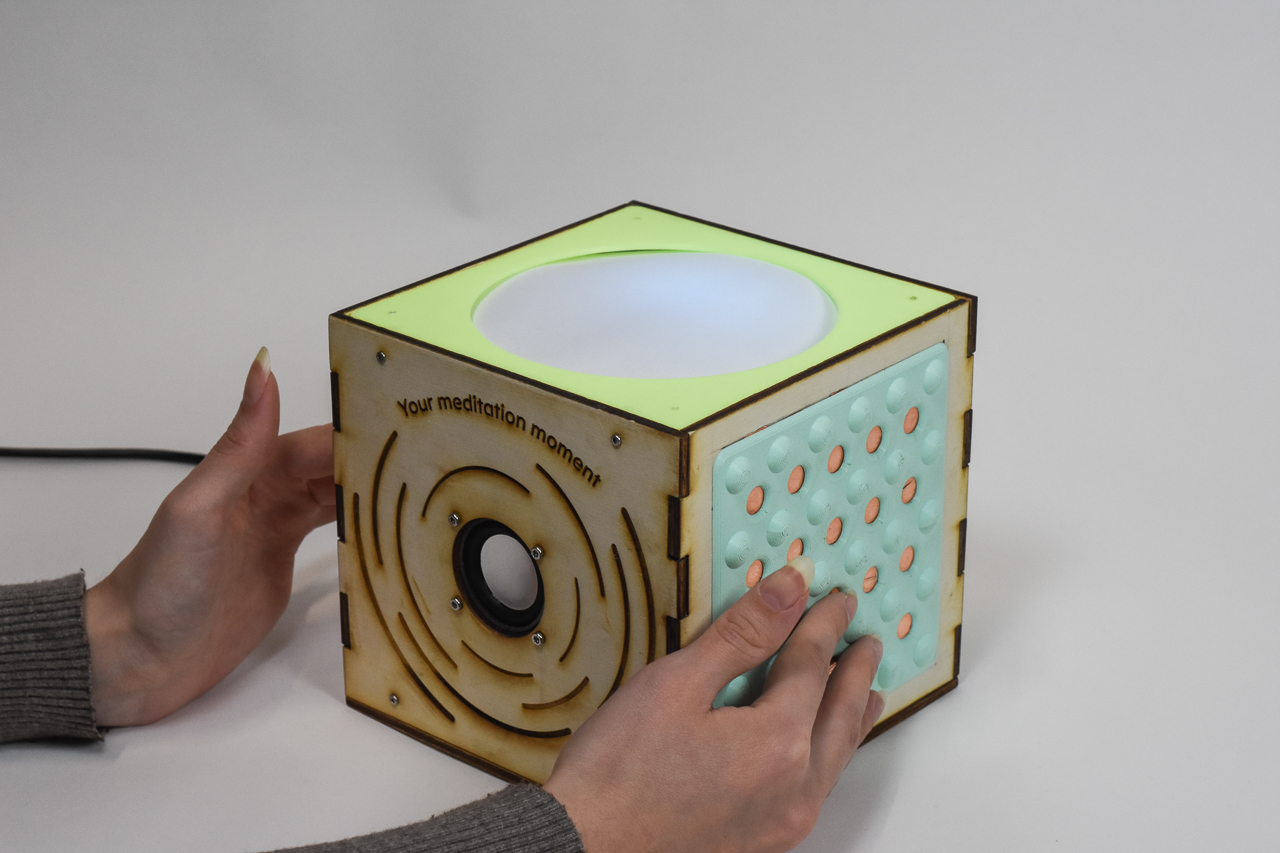
- The user holds the cube, touching and fidgeting with its tactile surfaces.
- Light and sound slowly fade, signaling the session is ending.
- A buzzer marks completion, and the cube is placed back in its spot.
Capacitive touch sensors detect simple gestures, which trigger:
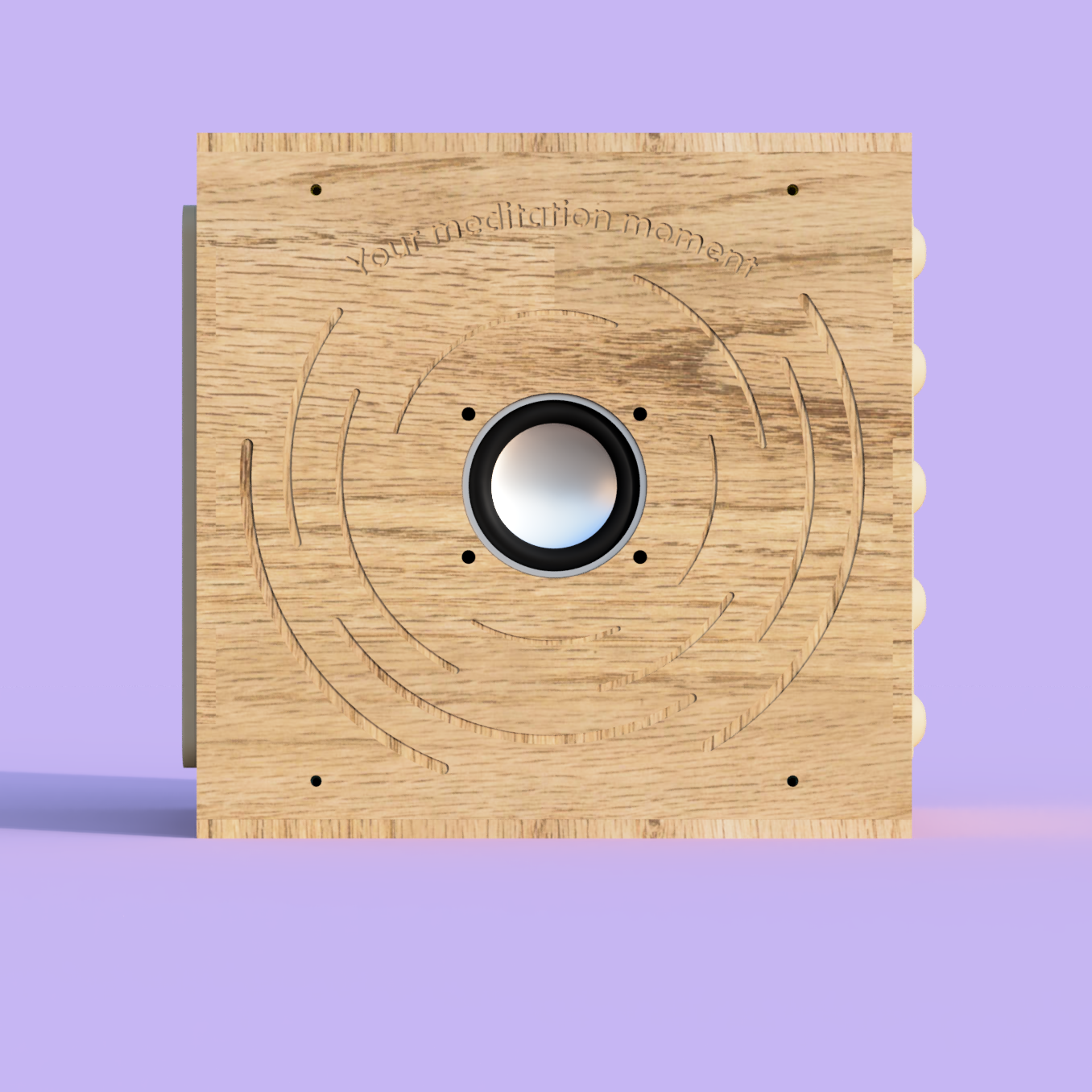
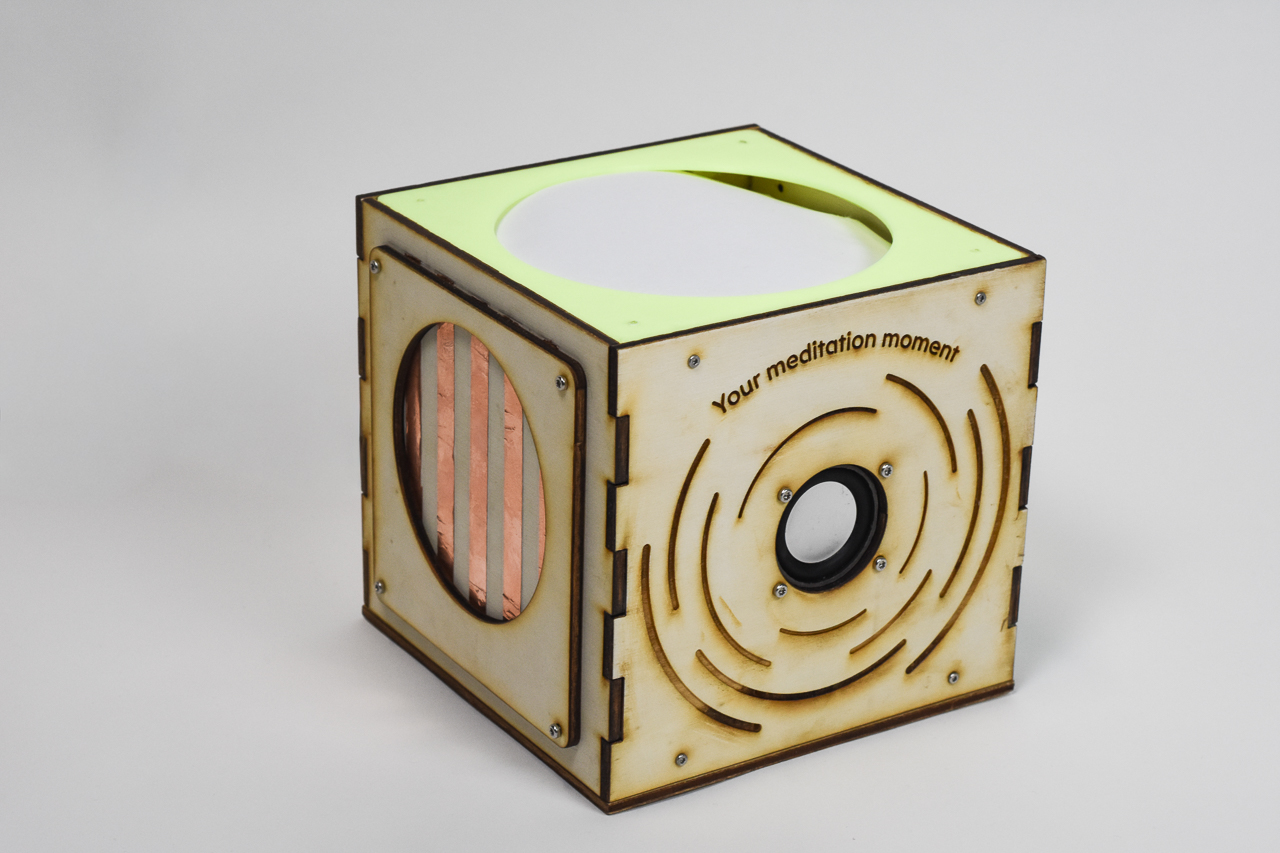
- color changes on the right panel
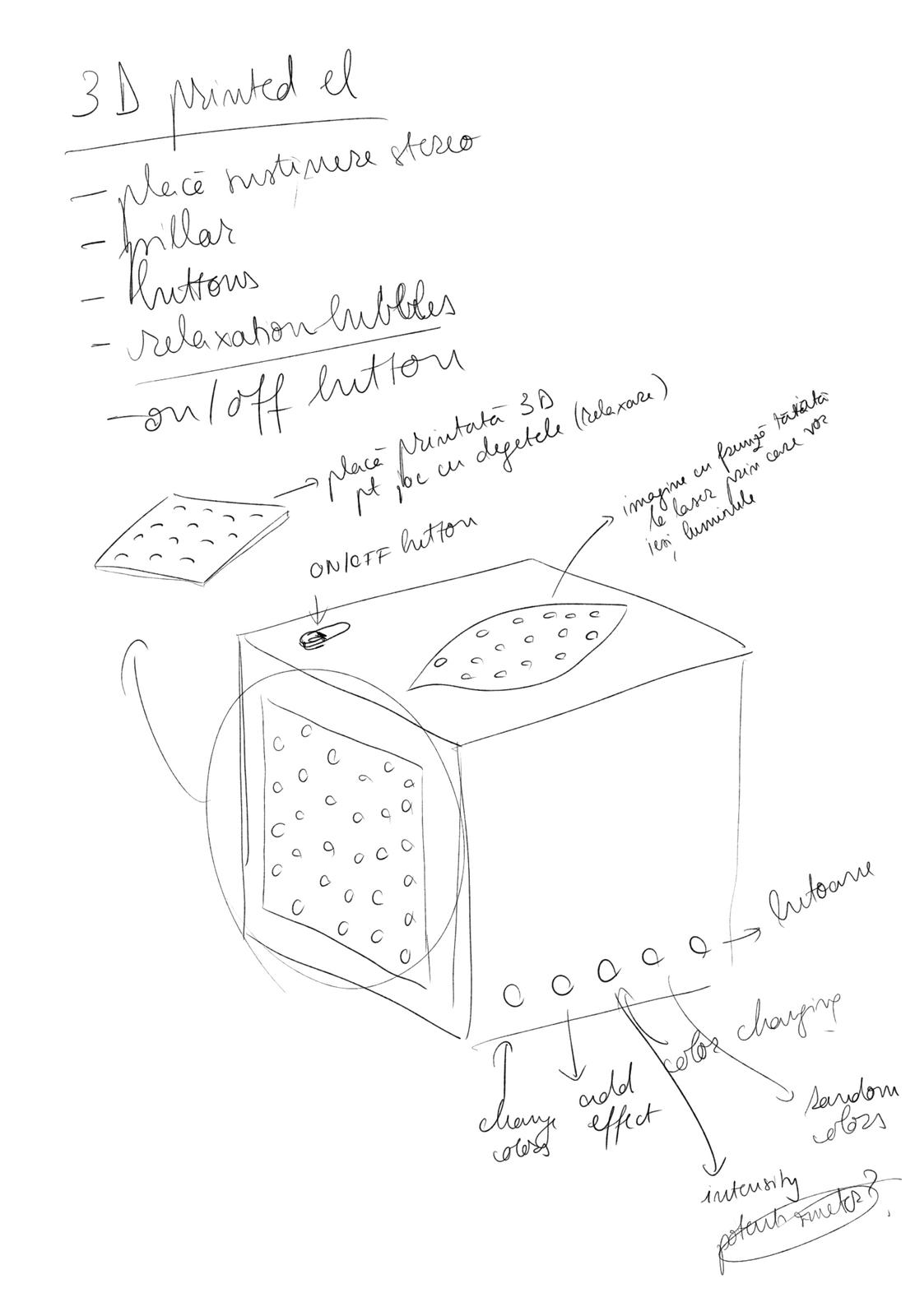
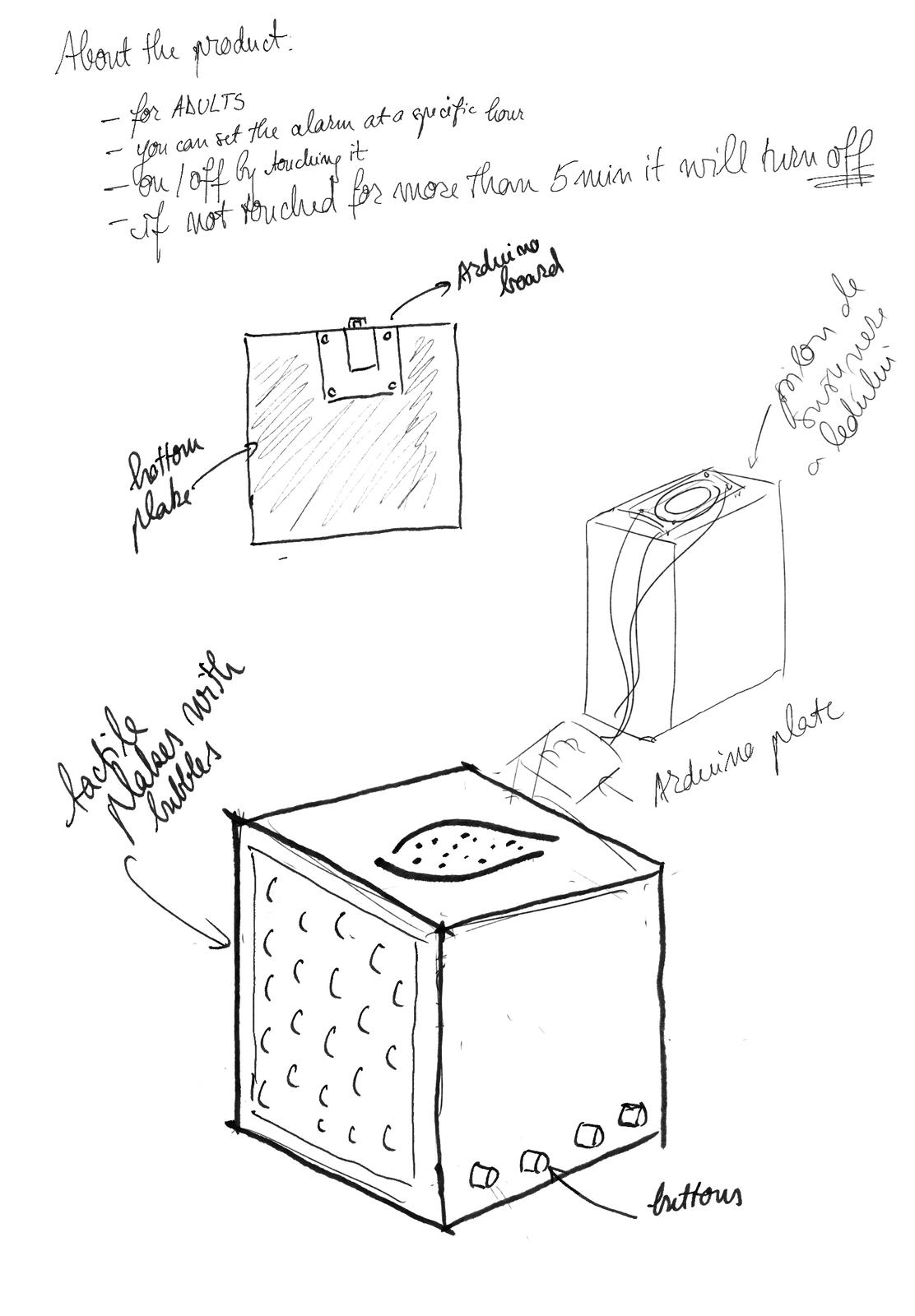
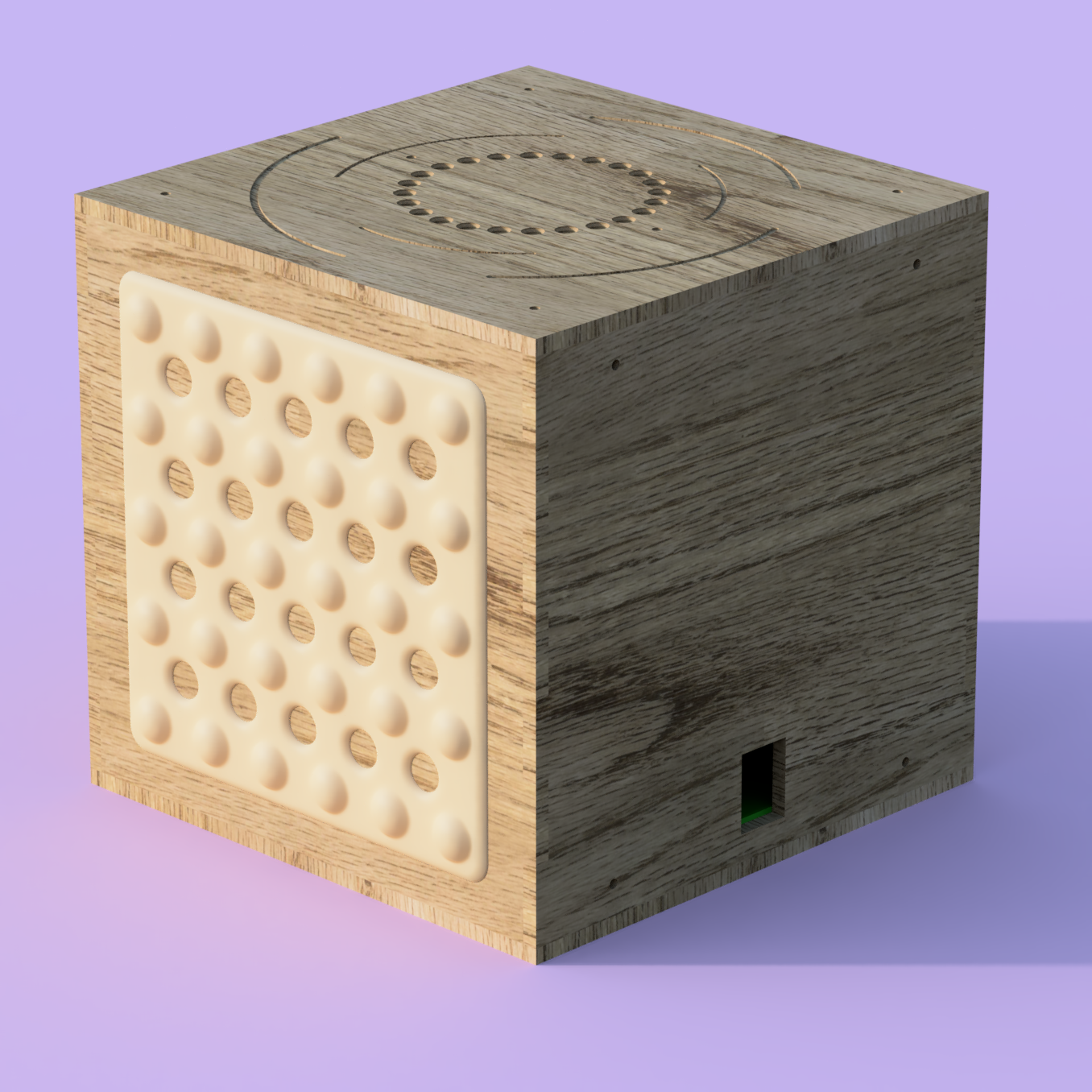
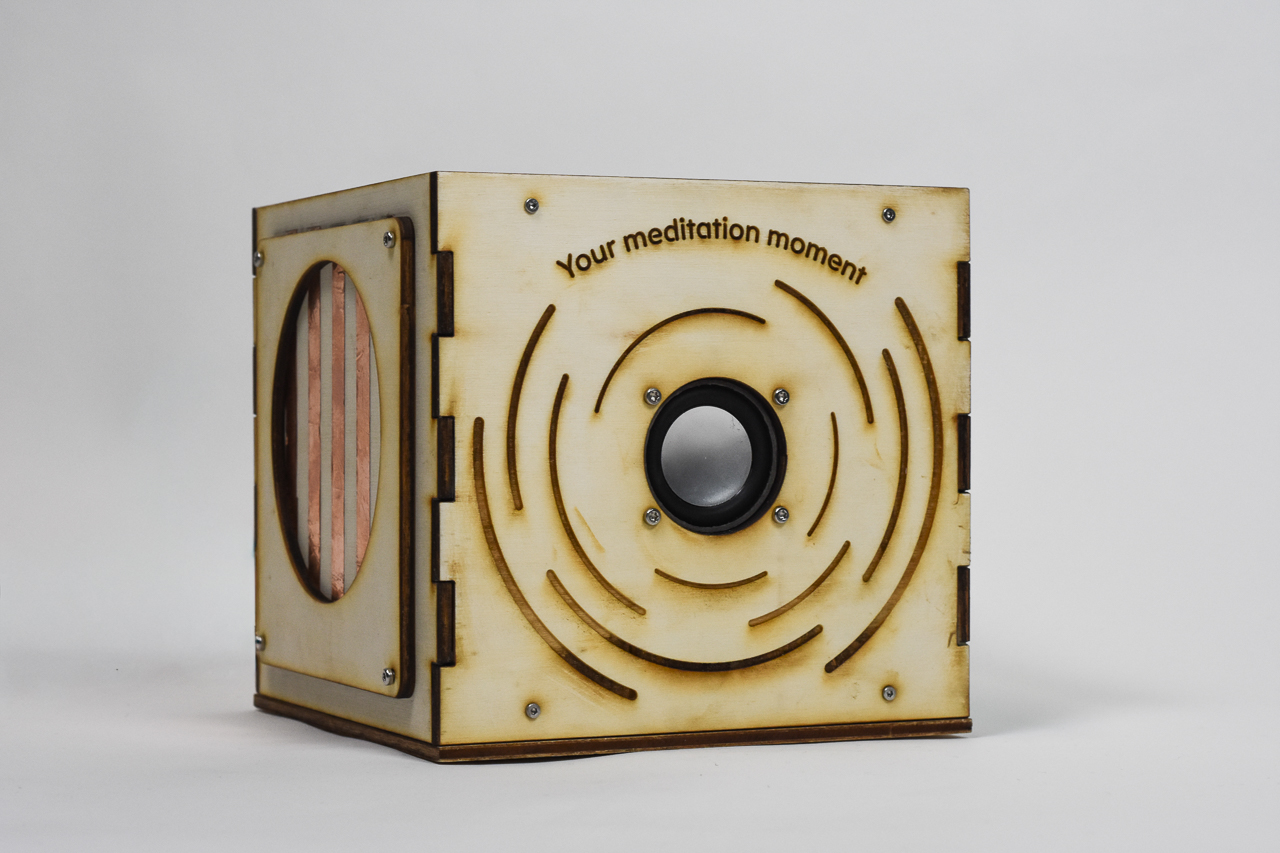
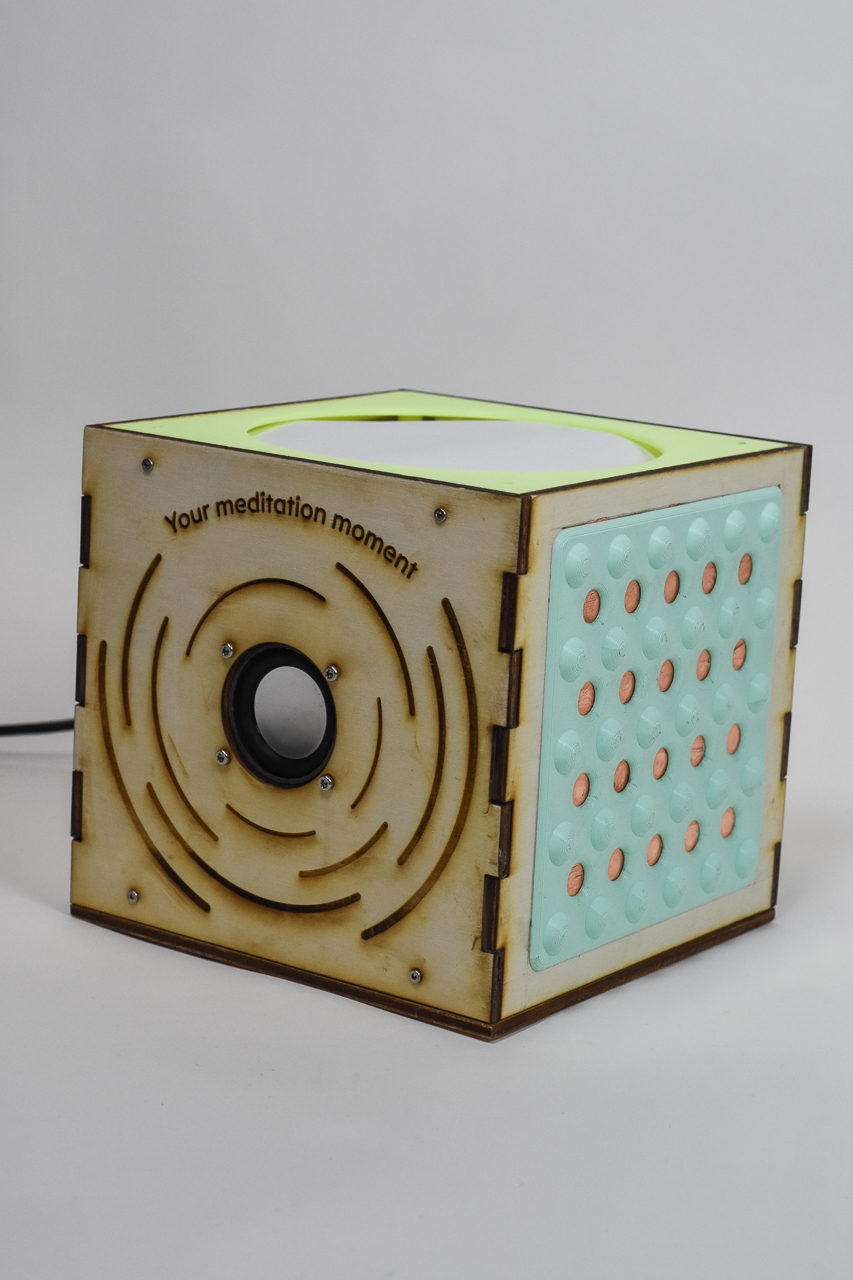
- brightness modulation on the left panel with a 3D‑printed massage surface
- ambient audio played through a small speaker
- a buzzer cue marking the end of the session
The cube’s behavior is intentionally slow and gentle, encouraging users to settle into a calm, focused rhythm.
Process
Atmosphere and Prototyping
The project began with a shared discussion about the atmosphere we wanted to create. Light became the central medium, supported by gentle ambient music.
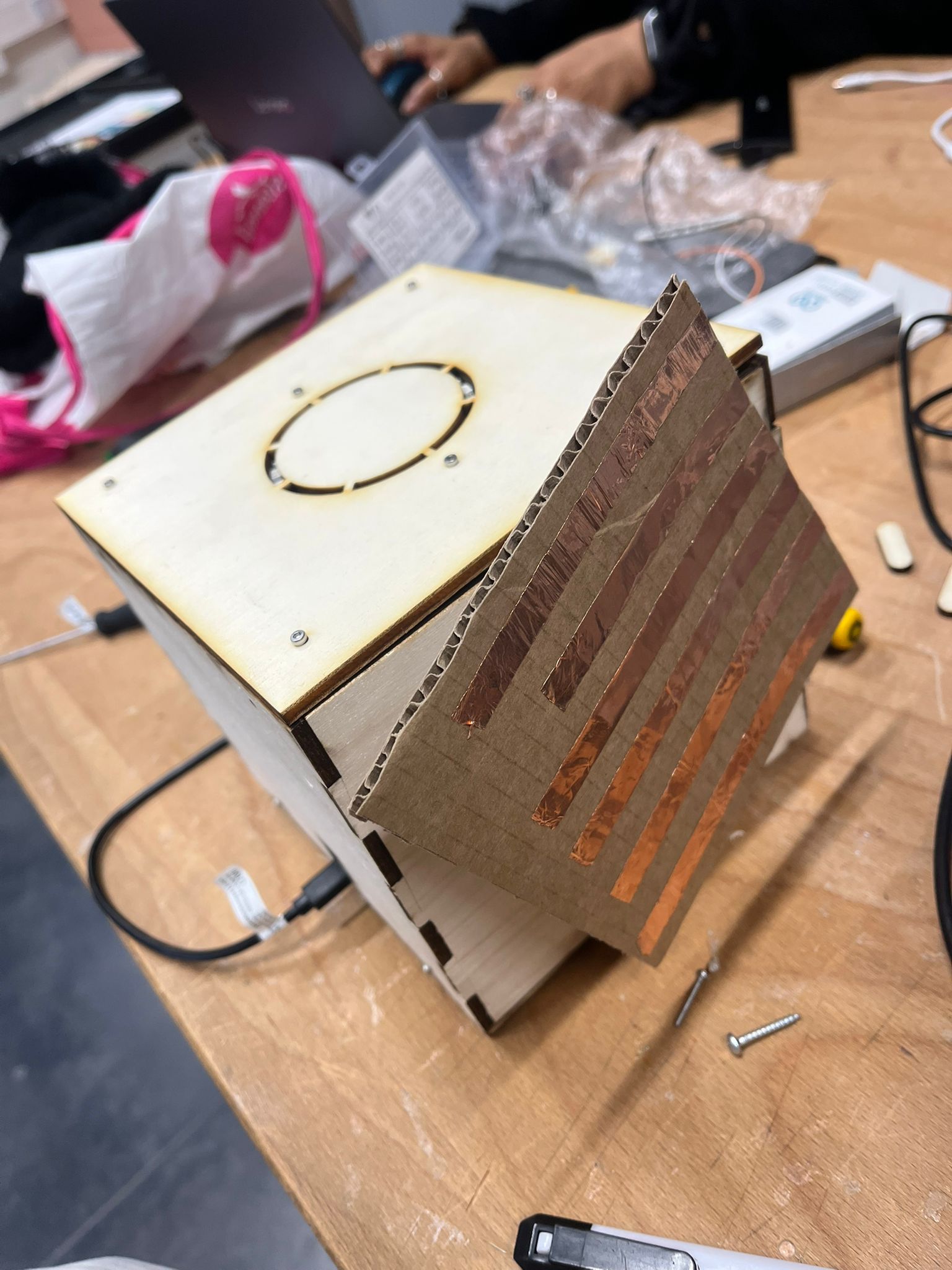
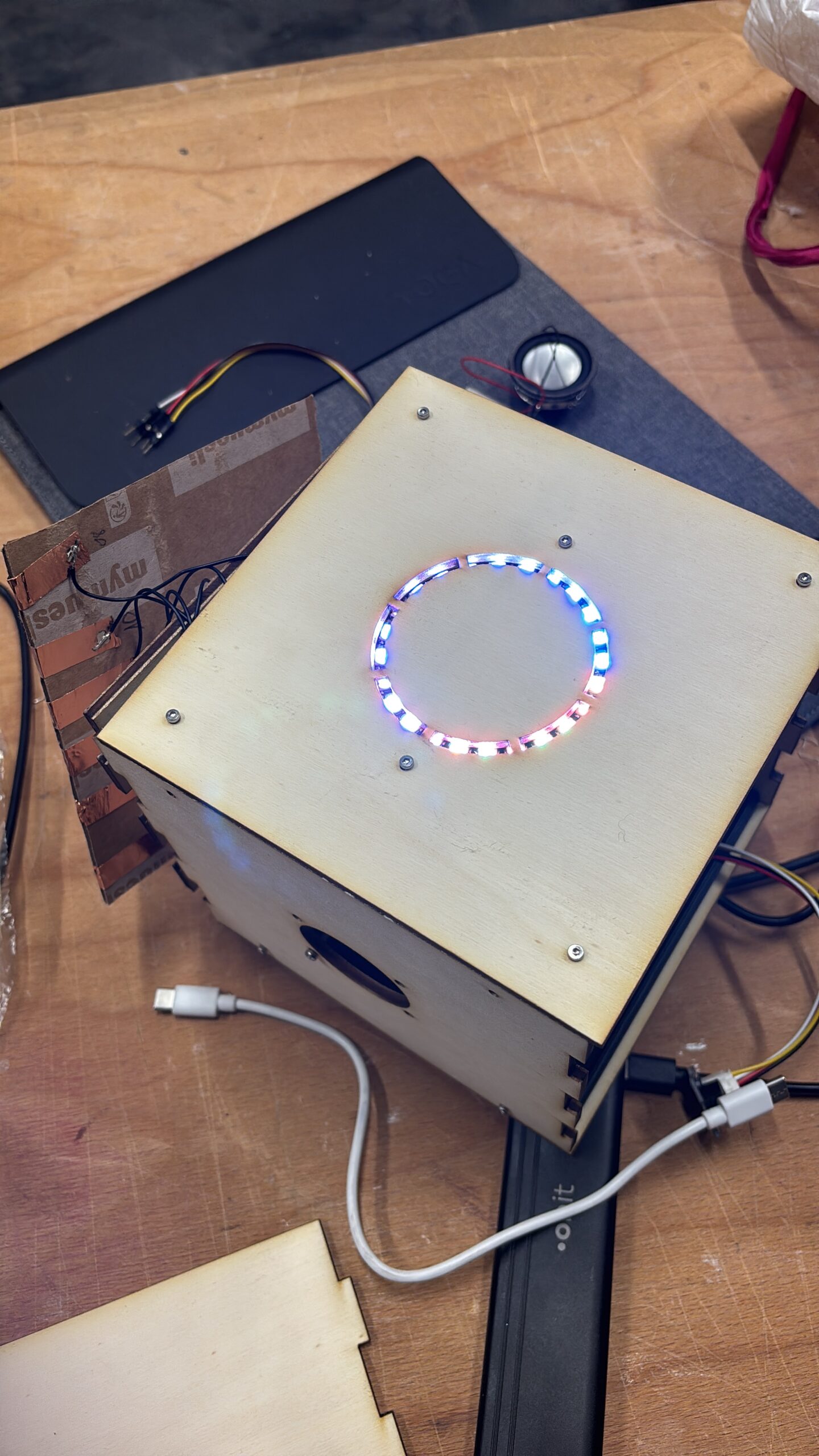
We explored form and tactility through cardboard prototypes, testing proportions and how the cube should feel in the hands.
Touch Interaction Experiments
We experimented with copper tape to prototype capacitive touch input. These tests informed the placement of sensors and the design of the textured surface.
Programming the Interaction
My main responsibility was shaping the cube’s internal behavior:
- programming capacitive touch sensing
- defining LED color transitions and brightness curves
- integrating the MP3 audio track
- synchronizing light and sound fade‑outs
- implementing the buzzer cue
I iterated extensively on timing and color behavior to create a coherent meditative arc.
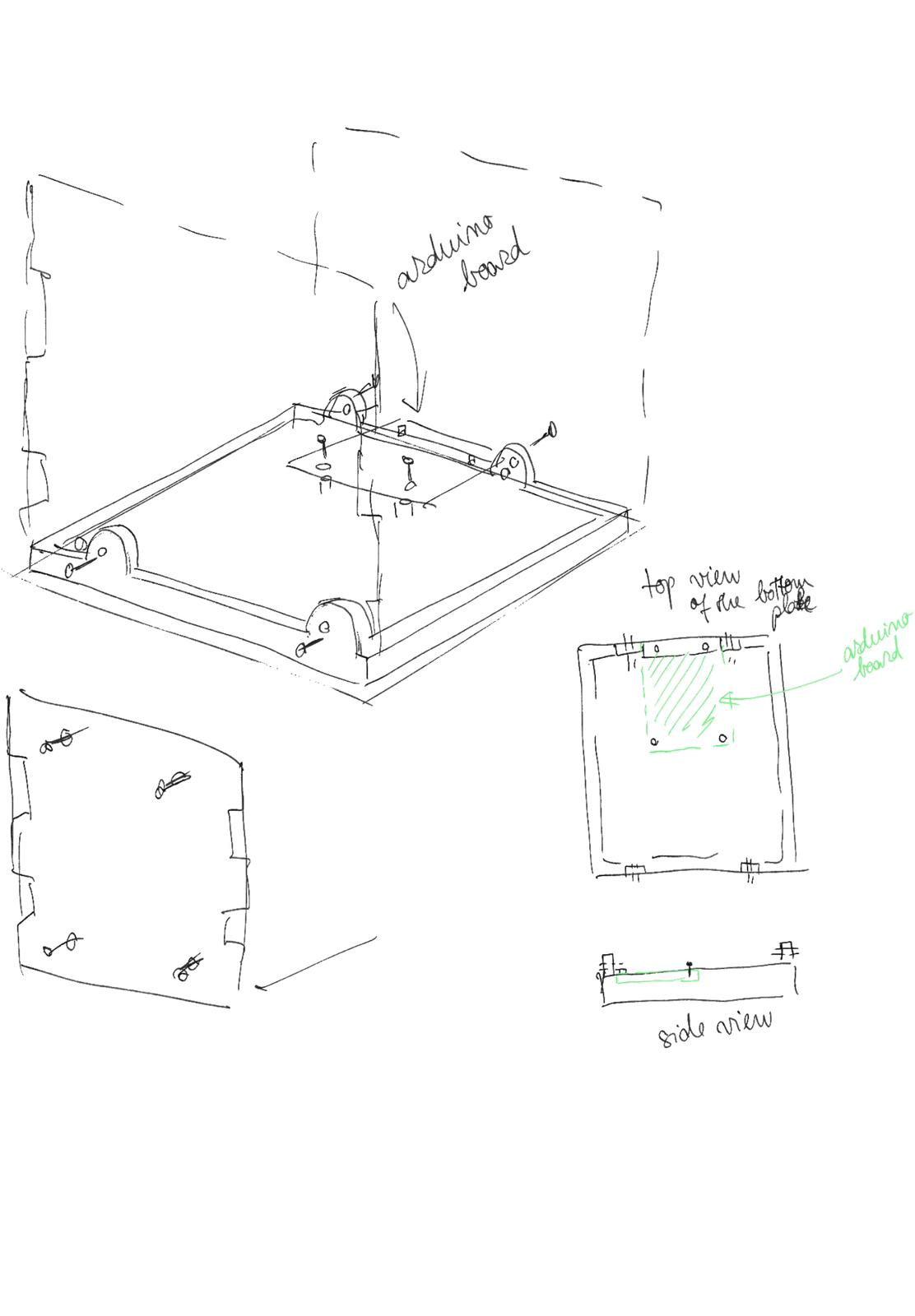
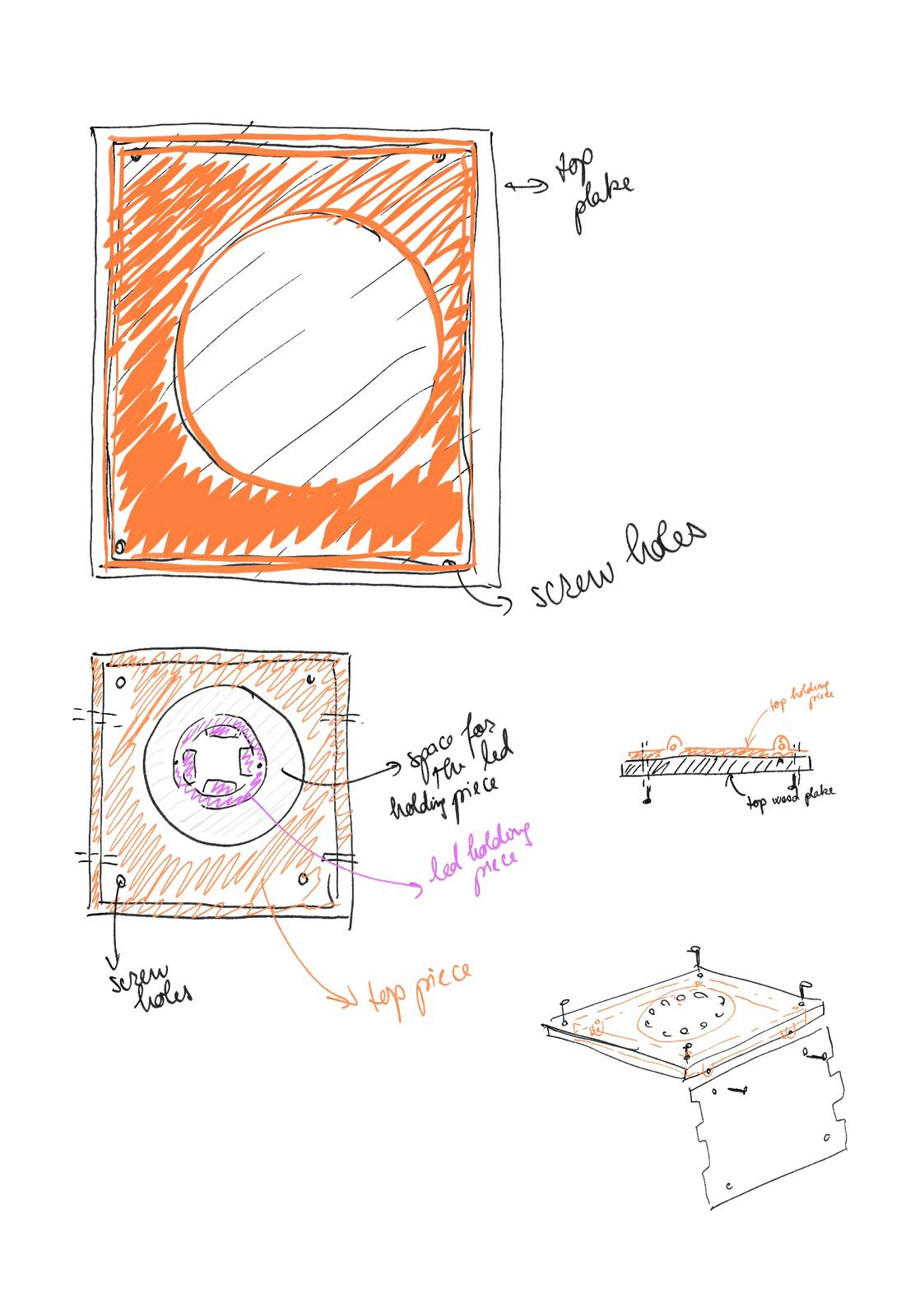
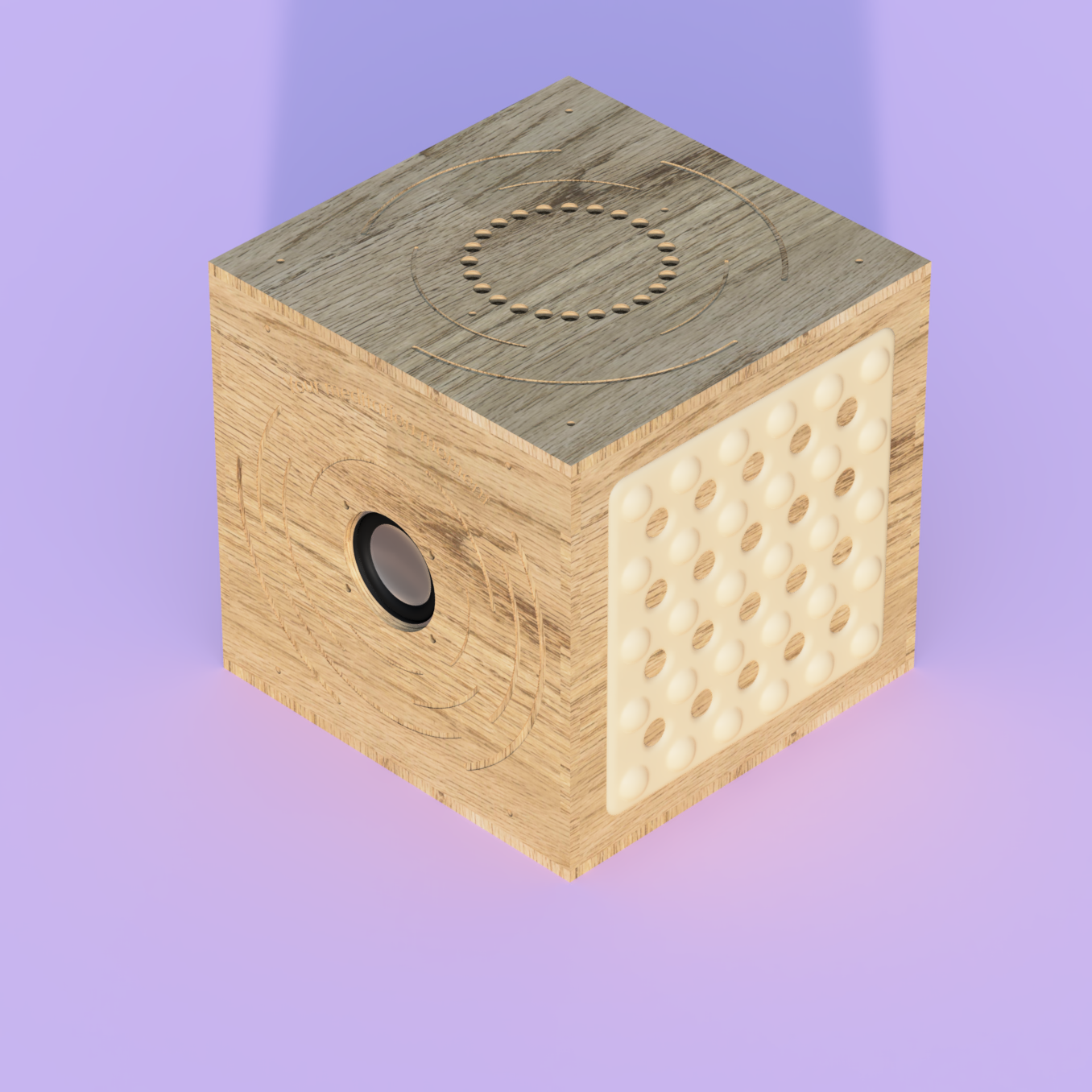
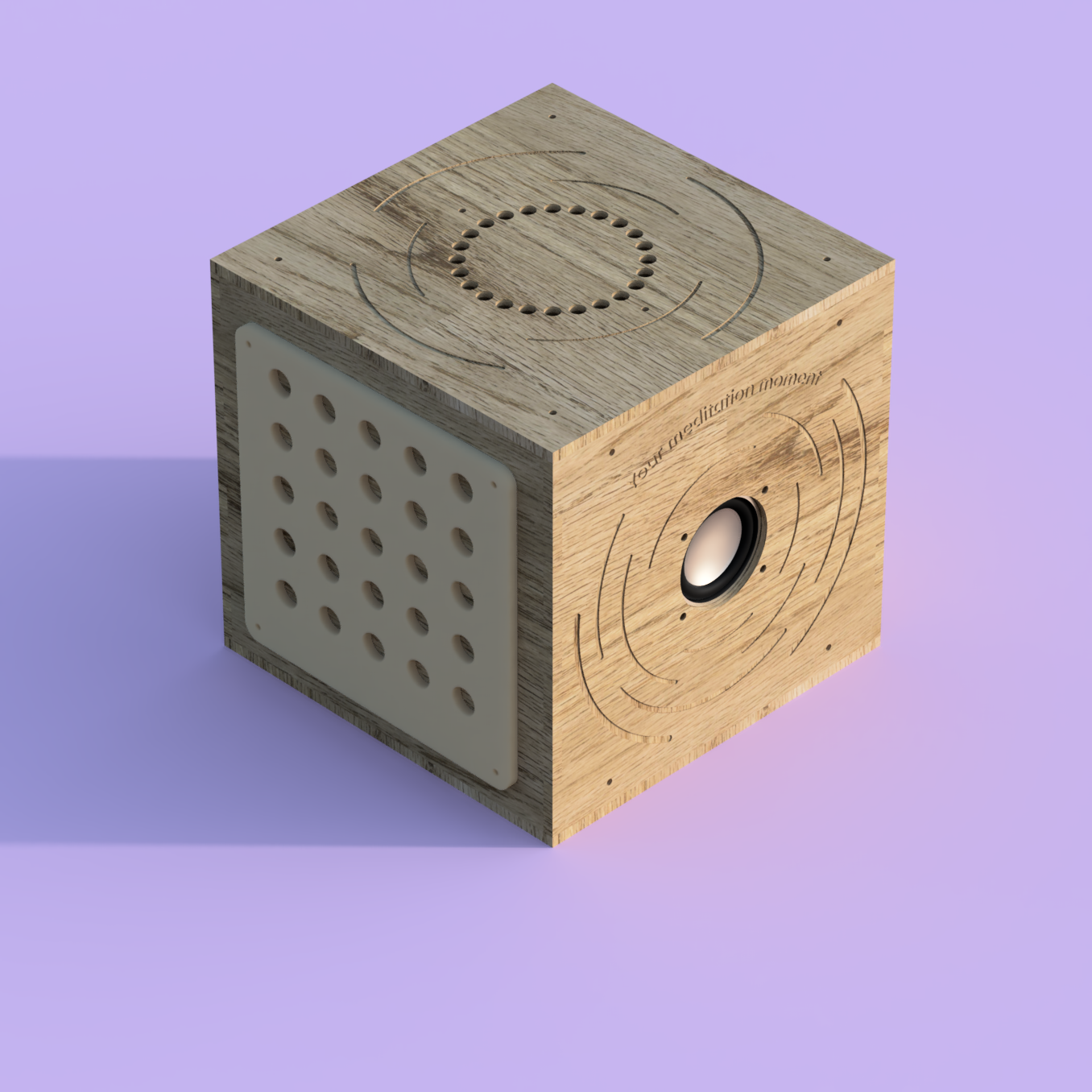
Fabrication and Assembly
My teammate handled the fabrication:
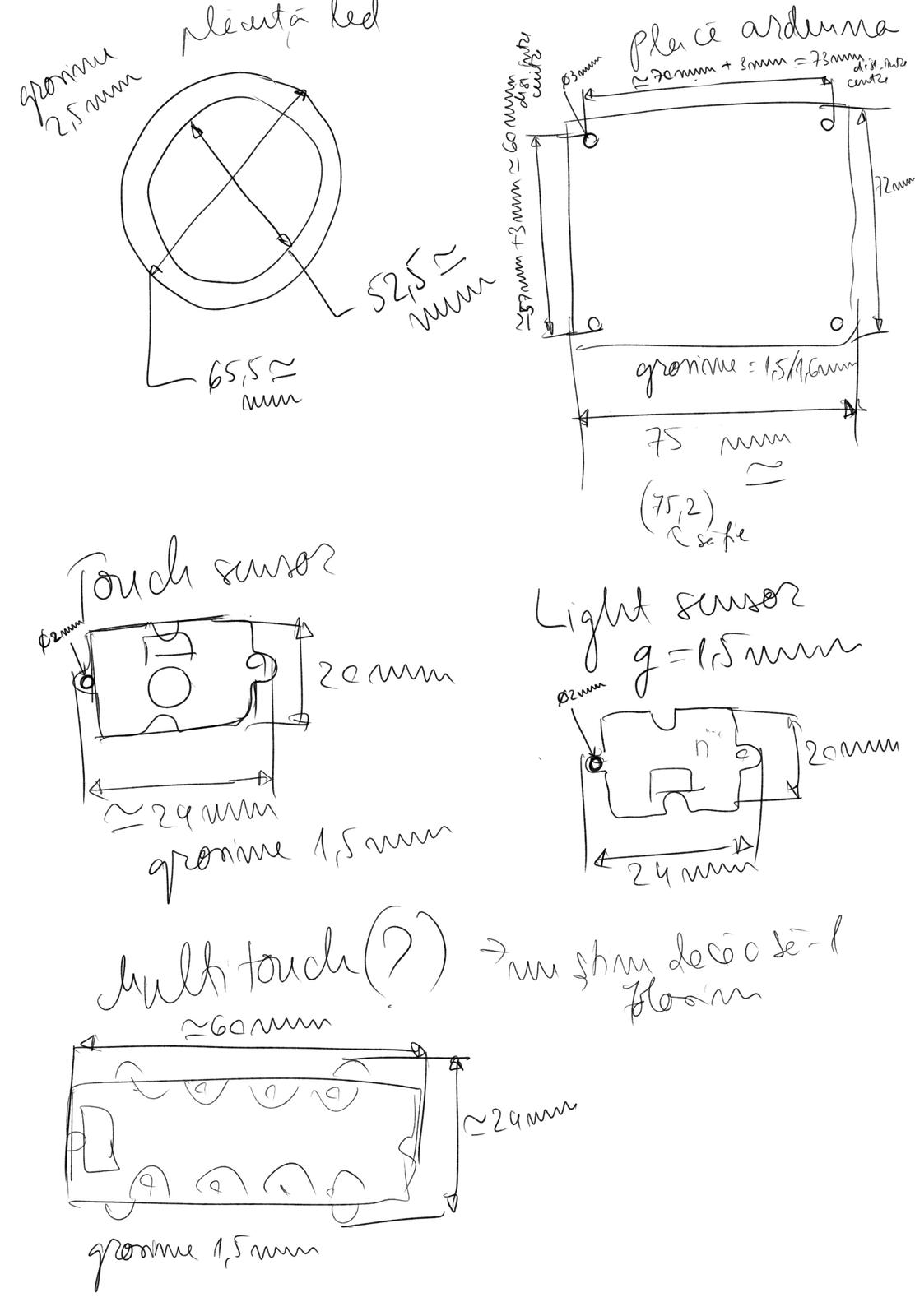
- laser‑cut wooden panels (cutting + engraving)
- 3D‑printed top cover and internal supports
- Fusion modeling for mechanical elements
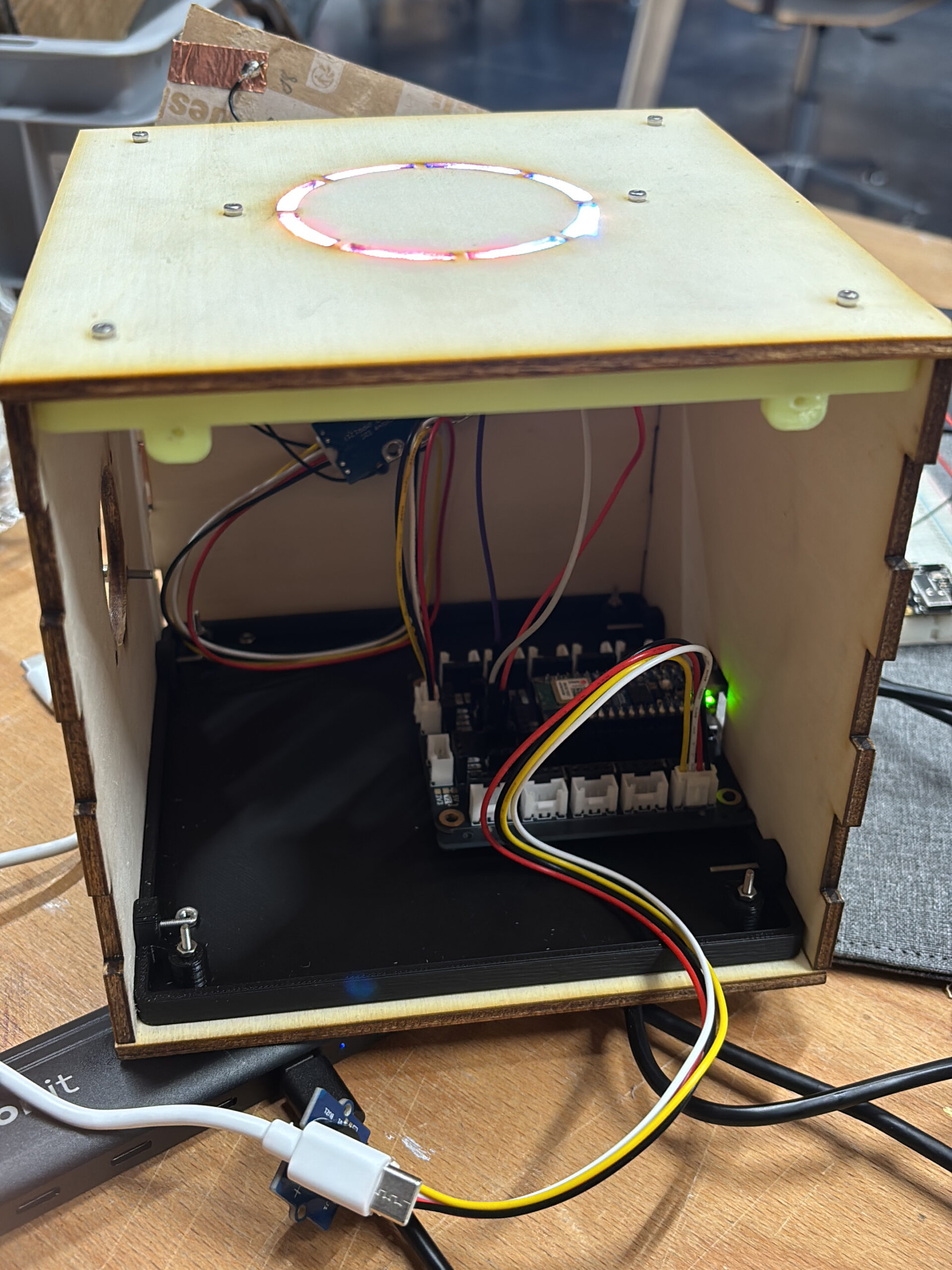
We assembled the cube using screws, glue, and custom internal structures. Copper tape remained visible on one side and partially integrated beneath the textured surface on the other.
Final Integration
Once assembled, we refined:
- sensor sensitivity
- light timing curves
- audio volume and fade‑out
- the pacing of the buzzer cue
The final prototype delivered a simple, structured meditative flow.
Reflection
Medity taught me how small, embodied interactions can shape emotional tone and guide user behavior. I learned how timing curves, light fading, and subtle audio cues can create a structured yet gentle meditative experience. The project also strengthened my ability to design interaction logic that feels calm, predictable, and emotionally coherent.
If I were to continue the project, I would explore:
- customizable session lengths
- richer soundscapes beyond a single MP3 track
- softer or warmer materials for improved tactility
- adaptive light behaviors that evolve over time
Medity remains meaningful because it demonstrates how calm technology can be expressed through a simple, handheld object.
Selected Works

Looking forward to hearing from you!
Copyright © 2026 Isabel Mercedes Parini.
All rights reserved.